Category: Uncategorized

  • You win some, you lose some.

    The title of today’s post means that not everything in your life will be good, but at the same time, not everything will be bad. There will be ups and downs. Life won’t be all ups, but it won’t be all downs either.

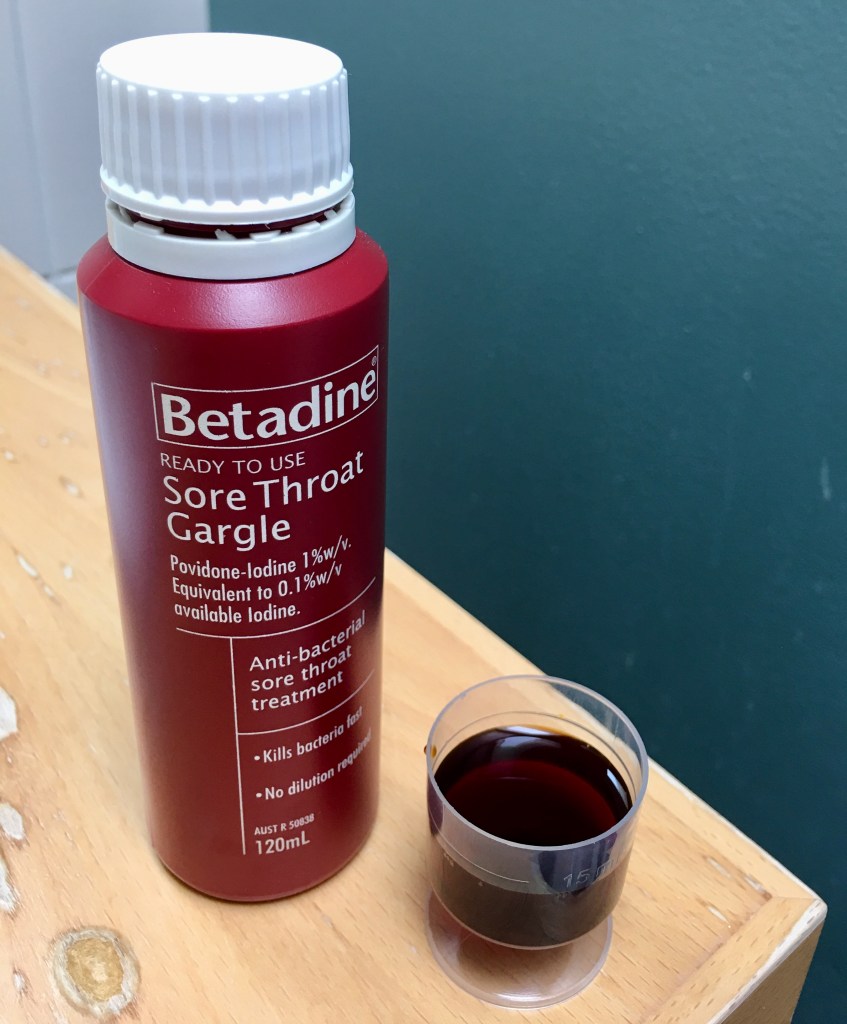
    Today is the first day of 2025, but I had a bad start. When I woke up, I didn’t feel well. When I got into bed last night, I felt OK, but when I opened my eyes this morning, my throat was killing me. It was very sore. Luckily, I had some throat medicine left over in the medicine cabinet

    I followed the instructions, and gargled with it for 30 seconds. When you gargle, you put liquid in your mouth, close your throat, tilt your head back, and make the liquid dance in your mouth. When the time’s up, you don’t swallow; you spit it out. I think it worked. Soon, my throat was feeling better, but it was still sore.

    The bottle says to repeat the dose every 3 or 4 hours, but the leftover bottle was now empty. I walked to a local supermarket to get some more, but they didn’t have any on the shelf.

    Then I walked to another supermarket, and what do you know? They were out, too!

    The score so far? Ups = 0 / Downs = 2. Not a good way to start the New Year. I was disappointed, but it wasn’t the end of the world. I hopped on a bus and got some in the Chemist Warehouse on Queen Street, so that was a win. UPDATE: Ups = 1 / Downs = 2.

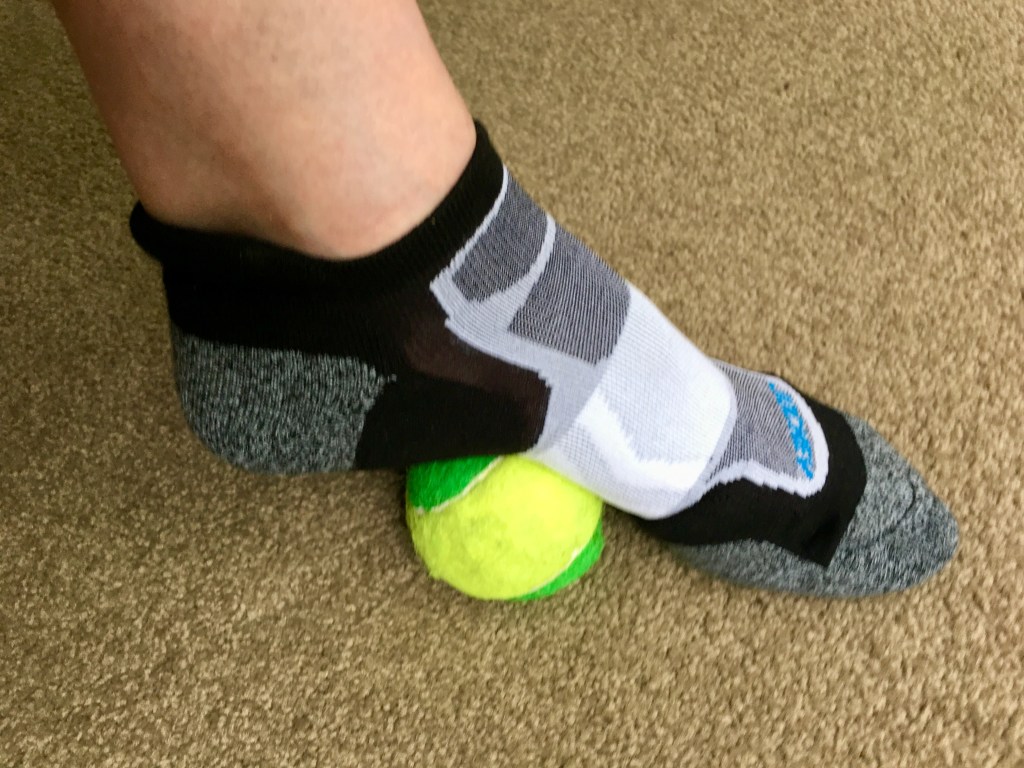
    But my sob story isn’t over yet. I have a sore throat, but I also have sore feet. Yesterday, I found an easy-to-do exercise on the internet for sore feet, but you need a tennis ball for it. I didn’t have one, so I couldn’t do the exercise.

    However, walking home from the first supermarket this morning, I saw this on the grass at the side of the road.
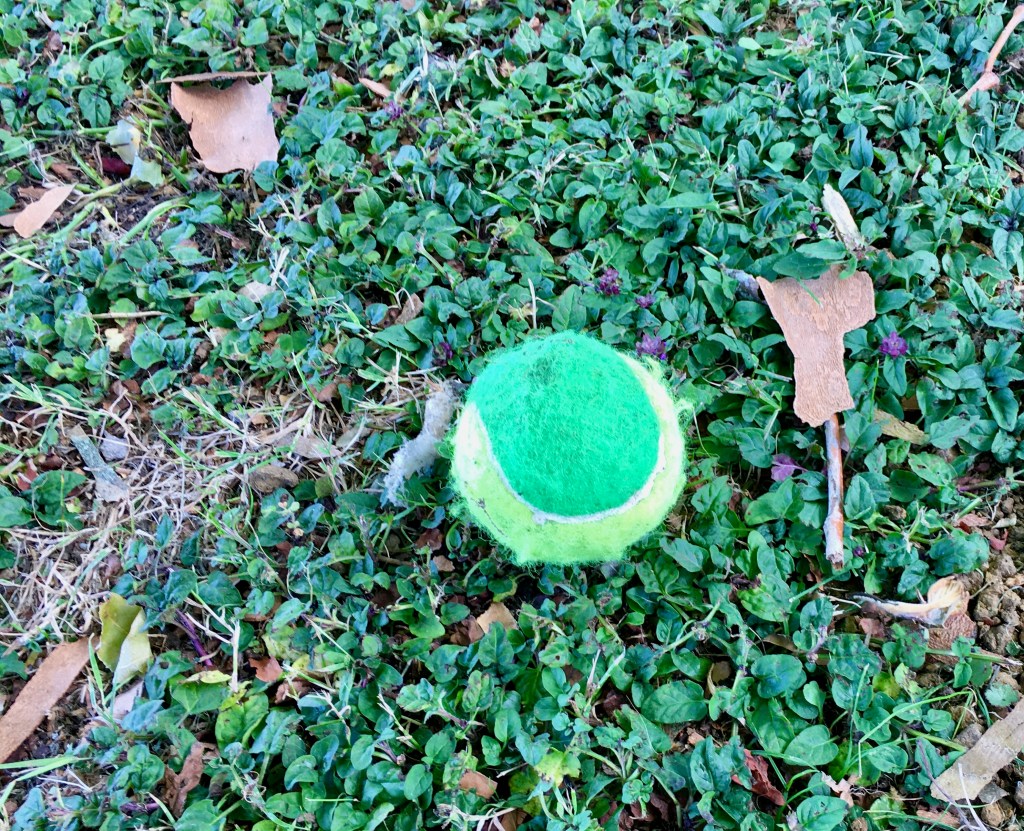
    Maybe some kid lost it, or some dog couldn’t find it, so I had to decide. The ball was dirty. Should I leave it or take it? I took it home, washed it and am using it to do the foot exercises.
    Today’s final score, then, is: Ups = 2 / Downs = 2. It’s a draw, a tie, even. Looking on the bright side, the day is finishing better than it started, but at the same time, it’s only early afternoon, so who knows?
  • Look at Me!

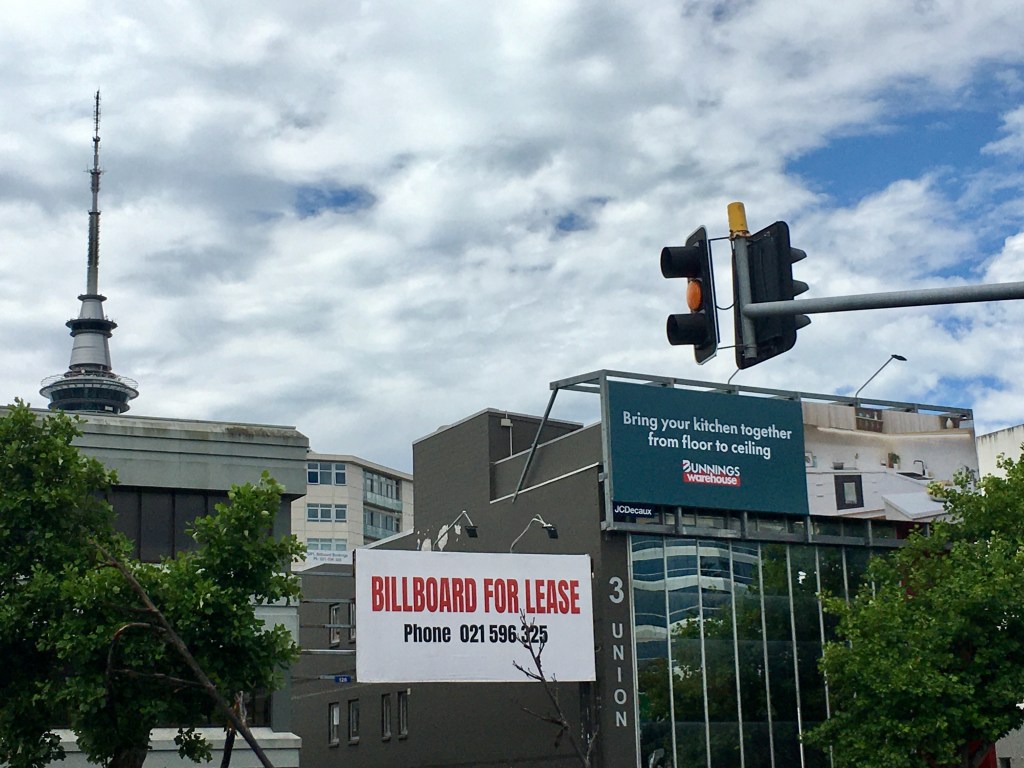
    The “me” in the title isn’t a person. It’s a thing, and you can see two of them in the picture below. The longer, colourful one is advertising a company, Bunnings, and the other shorter, plainer one is advertising itself. They are both billboards.

    They have a waterproof covering, and they’re nailed all along the top, the sides and the bottom to keep them in place. Sometimes, when it’s windy, you can see the centre moving in and out. 

    Billboards aren’t usually at eye level. Instead, they’re pretty high up, and when an old one is coming down or when a new one is going up, workers have to use a special machine to help them work safely. It’s called a cherry-picker.

    Billboards are big because people need to see them easily. You won’t see billboards on side-streets. They’re always on main roads or near motorways because that’s where most of the traffic is, and that way, more people see them more often.

    The two billboards in the top picture are traditional ones, and they never change. They’re always the same. 

    But there’s another kind of billboard. This one is digital or electronic, and this kind changes.

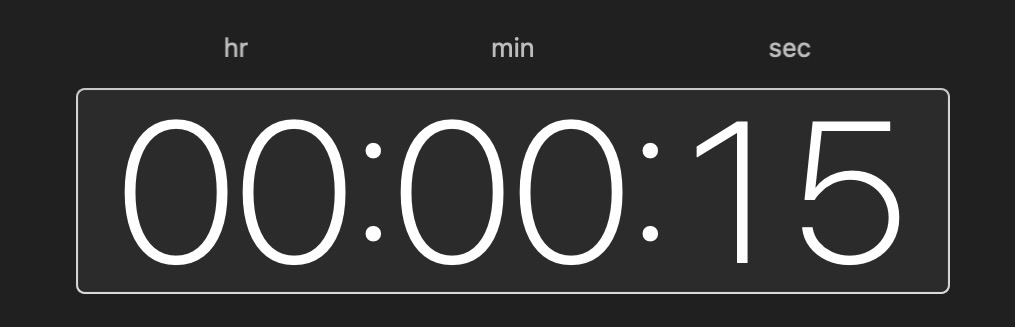
    Here’s how it works. An ad appears and stays for about fifteen seconds. Then it disappears, and another ad appears to take its place for another fifteen seconds. Then that one goes and another one arrives, and on and on until the first ad reappears.

    Screenshot

    How do I know the ads stay for fifteen seconds? Well, one day, I stood and I counted in my head. I watched about half a dozen ads, and the average time they stayed was what I told you.

    Now standing on the street looking up at billboards isn’t very exciting, so why was I doing it? Well, I was walking along, saw an ad, and wanted a picture of it. But as soon as I took out my phone, the ad vanished.

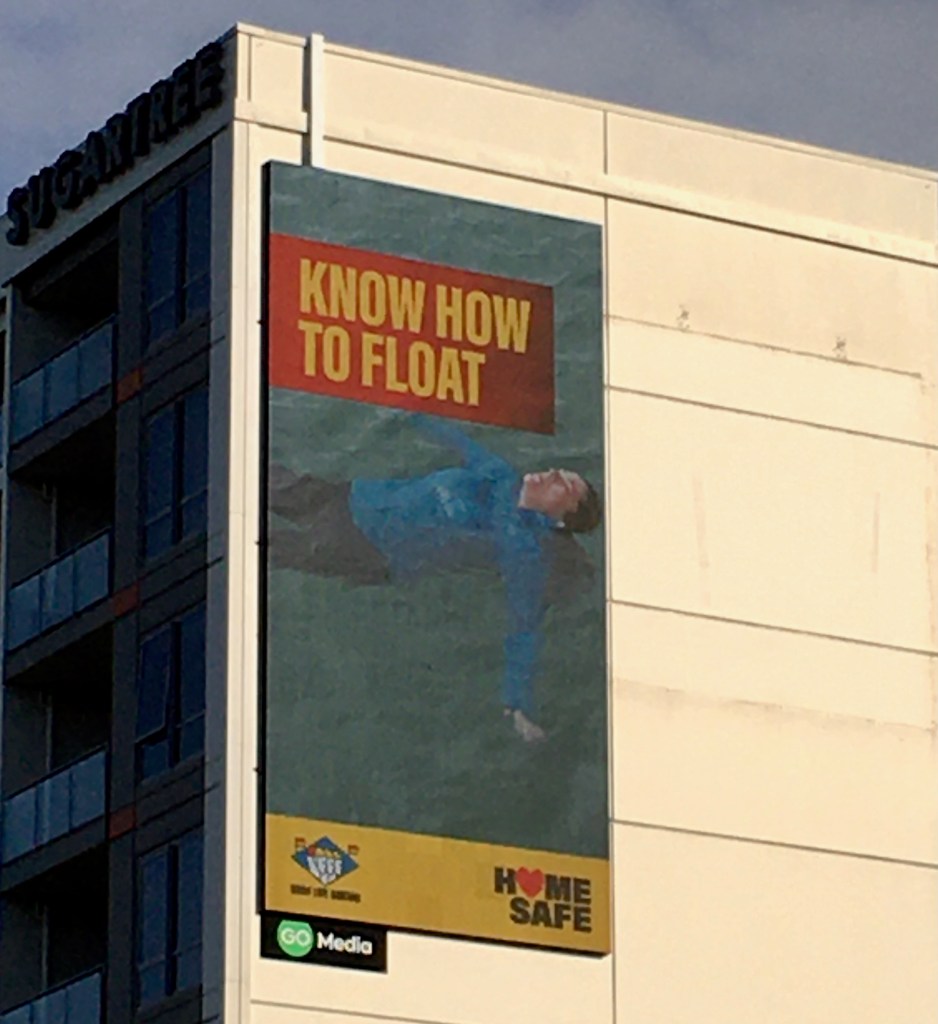
    So I decided to wait until the ad came round again. I waited. And waited. And waited some more. And then some more. I waited a long time, but the ad didn’t come back. I was just about to walk off when it re-appeared, and because I already had my phone in my hand, I got the photo, and here it is.

    There’s a reason why I wanted to take this picture. This blog is for language learners or for people who find reading hard, and I noticed that there are four words in the ad. Each word has the letter “o”, but only two of those “o”s have the same sound. Which two?

    Importantly, don’t forget the message of the ad. If you’re playing around water or swimming, be careful, stay safe, and live to see another billboard.

    And if you haven’t figured out which two words rhyme, they’re the first and the last.

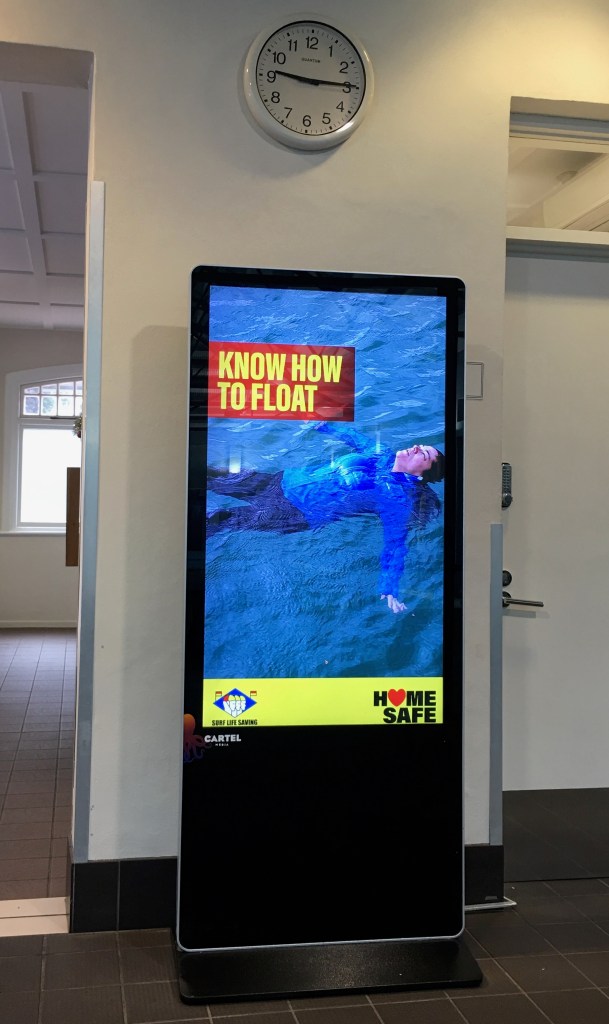
    And after I went to all that trouble getting a photo of the know how to float billboard, I saw a better one at my local swiming pool a few days later!

  • Go Figure!

    TWO WORDS, ONE MEANING

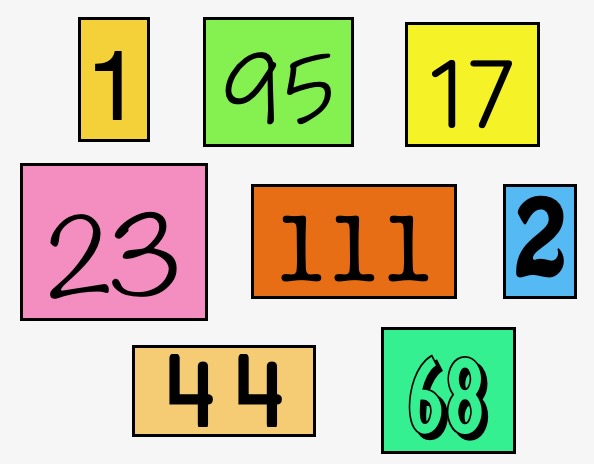
    One, two, seventeen, twenty-three etc. These are all numbers. 

    Another word for numbers is figuresNumbers and figures mean the same. 

    ONE WORD, TWO MEANINGS

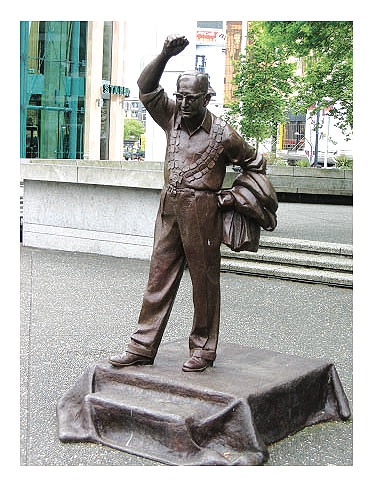
    Another meaning for figure is shape. Sometimes, figure can mean a statue of a person, for example this one in Aotea Square in the CBD, or this one, also in the CBD. 

    Figure has another meaning. Everyone has a figure. It means your body shape. Some people watch their figure. This means they’re careful about what they eat. If you’re lucky, as you get older, you can keep your figure. This means you don’t put on too much weight or lose too much weight.

    Numbers and figures are things, so they’re nouns, but figure can also be a verb.

    When figure is a verb, it means to use your head to find the answer to a problem, especially when the verb is to figure out

    So that’s the background to today’s story. Now here’s the story.

    A couple of days ago, I needed to cross a busy main road, so I stopped at a set of traffic lights and pressed the button. While I was waiting for the lights to change, I noticed this sticker on the pole, and it got me thinking.

    When we have a problem, especially a big problem, we might think that it’s too hard, that we can’t solve it. We don’t know what to do or how to start tackling the problem.

    In that case, the important thing is to take a breath and think. There’s usually an answer to any problem.

    Looking again at that sticker, I think the first word is the most important: WE. Sometimes, you can’t solve a problem on your own, but that’s what other people are for. 

    So, don’t be afraid to ask for help

    As they say, two heads are better than one.

  • A Tale of Two Cars

    Let’s start with something easy.

    Question one: What’s yellow, blue and white, and has four wheels?

    Answer:

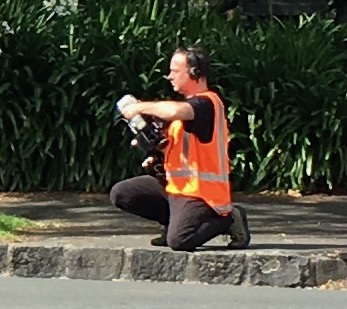
    Question two: The guy in the orange vest in the picture below is kneeling at the side of the road. What has he got in his hands? The picture isn’t clear, but the thing begins with a “c”, ends with an “a”, and has six letters in total. If you still can’t guess, read on.

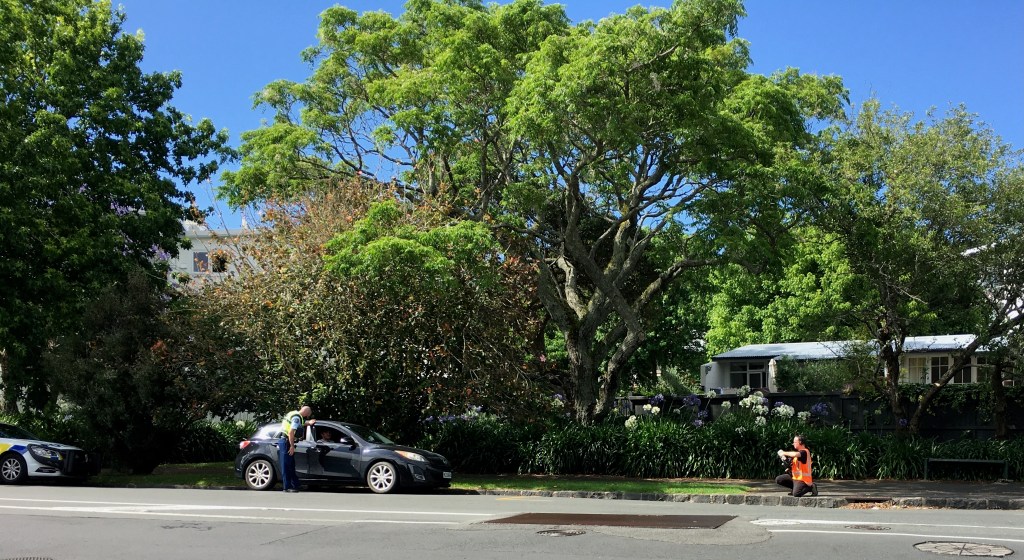
    One morning, I was walking down the road to the supermarket. On the other side of the road, I saw a policeman standing in the road beside a black car, talking to the driver. His police car was parked a short distance behind the stopped car.

    I took a photo with my phone, and stopped to look. I couldn’t hear anything, but I thought the driver of the black car had done something wrong, like driving too fast, for example. This happened outside a primary school, so there are speed restrictions around schools. Well, that was my first thought, but sometimes you can get the wrong end of the stick.

    Anyway, I did my shopping, and on the way back home, I saw a young man on the other side of the road, walking up and down, and talking on his phone. He was dressed the same as the driver of the black car, and in fact, it was the same guy. I went over and talked to him, and I told him I had taken a picture of the incident. I showed it to him, and I asked his permission to use the photo for this post. He agreed.

    I walked on, and then I heard somebody running up behind me. When I looked round to see who it was, it was the driver. He said to me, “I don’t suppose I could get a copy of that picture, could I?”, so I did what he asked.

    But that’s not the full story. Here’s the order that things happened. As he was driving, the young man’s fan belt broke, and his car wouldn’t move.

    A police car was passing, saw the problem and helped. The policeman got out and pushed the broken-down car to where it’s sitting in the picture.

    In the police car, there was a cameraman who was taking films for a TV police show, and he’s recording the policeman talking to and helping the driver.

    But that’s not the last word; there’s more! The driver didn’t have just one piece of bad luck; he had two!

    He was on his way to a friend’s graduation ceremony at the University, and when his car broke down, he missed it. Maybe he wanted a copy of my photo as proof for his friend of why he missed the capping ceremony.

  • You’ll Never Guess!

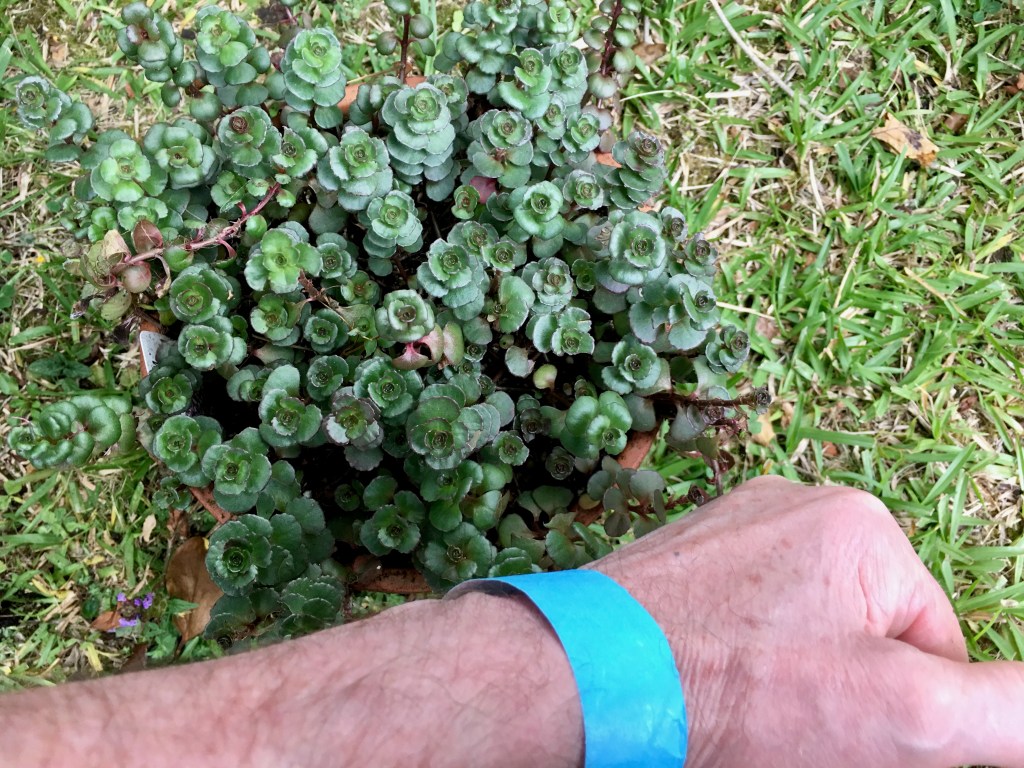
    What’s the connection between this small, shiny, green plant and my left arm? I bet you don’t know, so let me tell you. But first, there are two things I like: gardening and swimming, and I’ll tell you about both.

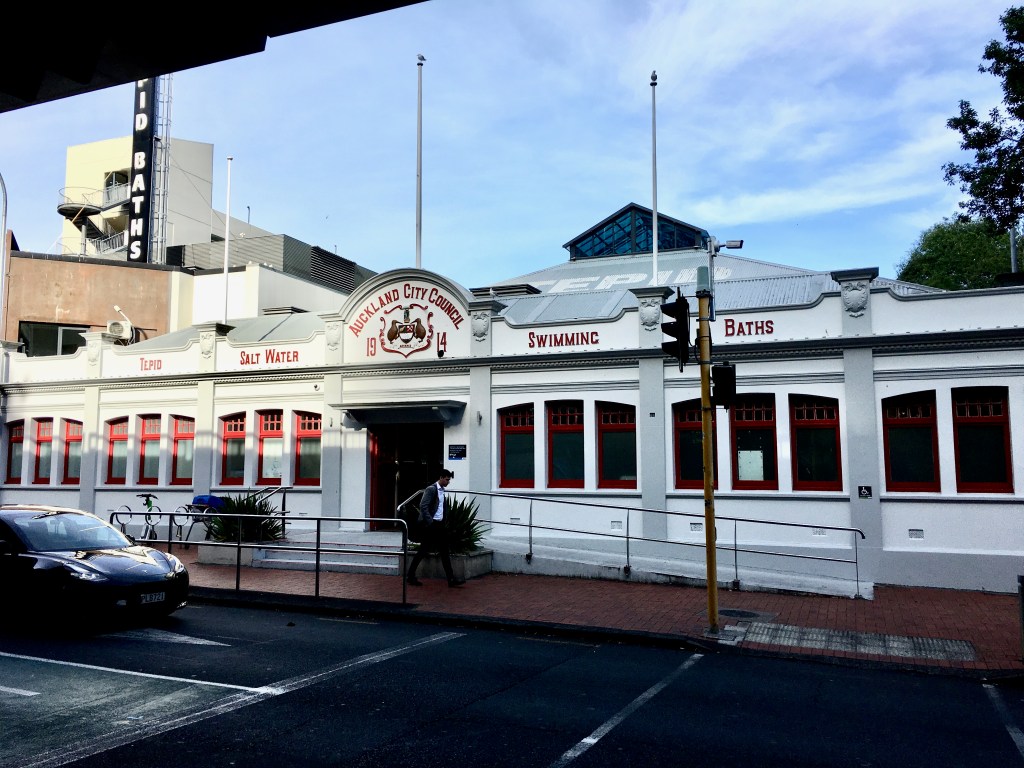
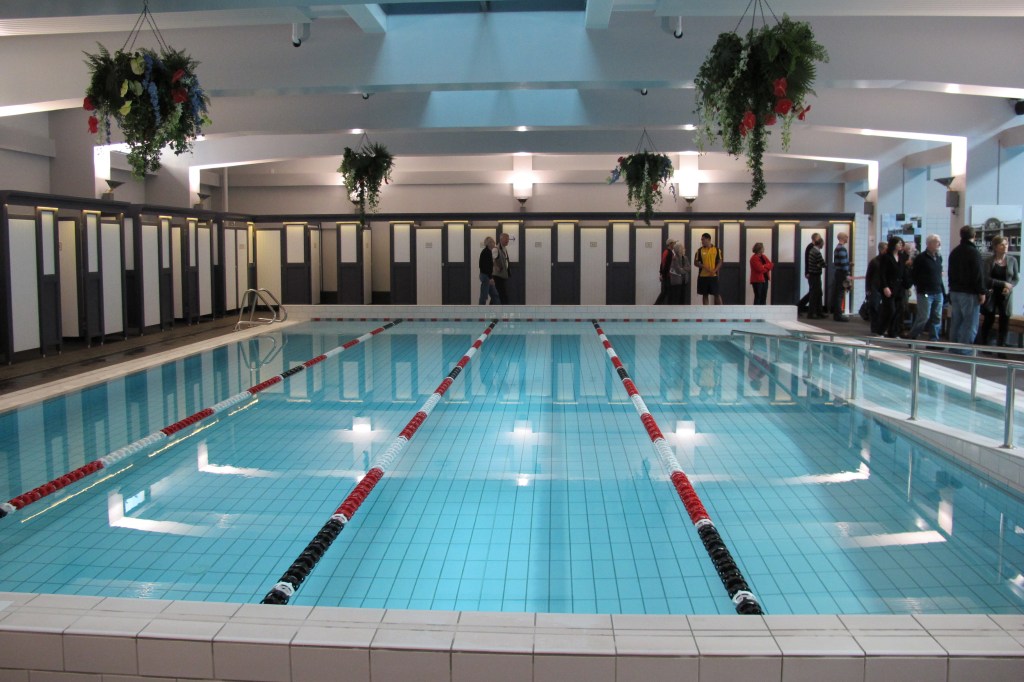
    I usually swim in an old swimming pool called the Tepid Baths. Locals call it The Teps for short. There’s a big pool with cold water, and a smaller pool with warmer, tepid water. Schoolkids have classes in this smaller pool when they’re learning to swim. It’s also where I swim in the early mornings.

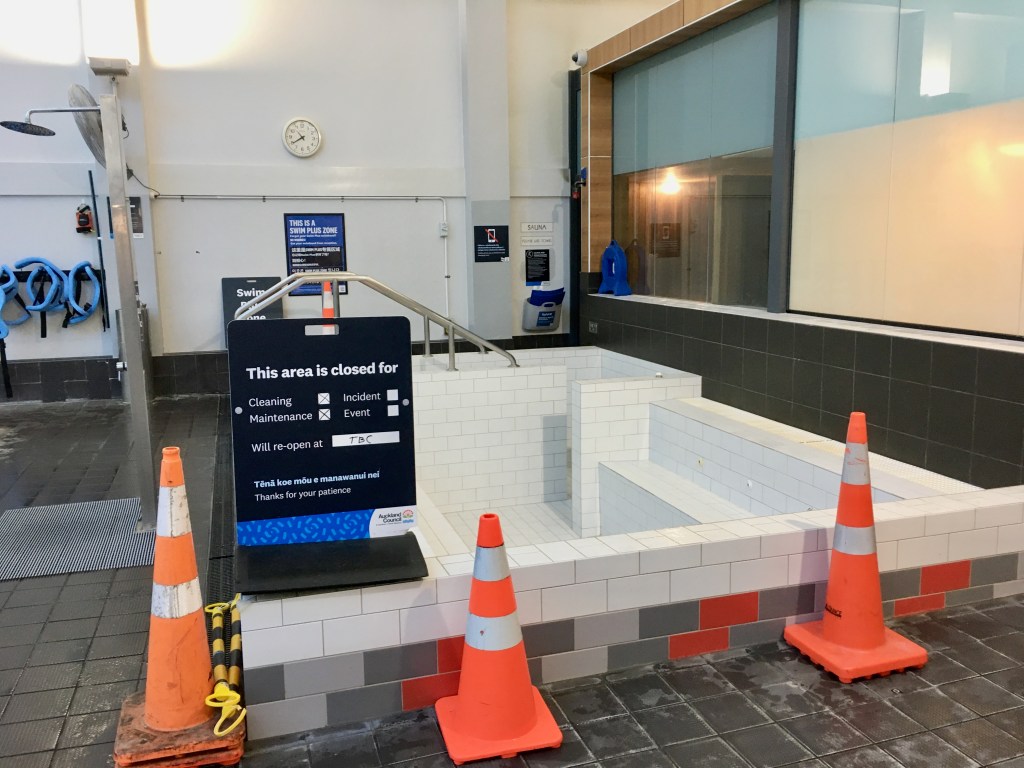
    Ten years ago, it was closed for renovations. At the re-opening in 2014, I took this picture of the small pool.

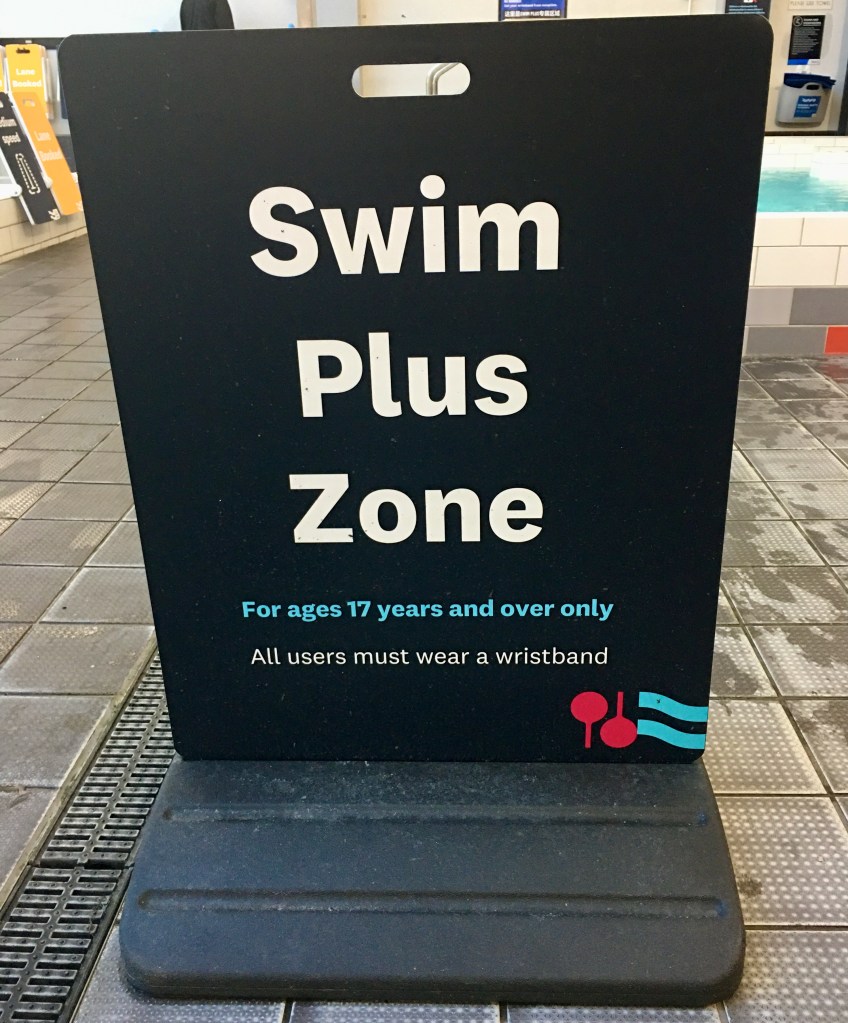
    Until recently, after your swim, you could use the sauna, steam room and spa pool at no extra cost. But now there’s a new rule, and it costs a bit more.

    If you want to use the sauna, for example, after your swim, you now have to wear a coloured band on your wrist to show that you’ve paid. I’m wearing one in the picture at the top because I didn’t have time to cut it off when I got home.

    Now for the other thing I like. After my swim, I didn’t go straight home. I went to a garden centre, and I bought some plants for my garden. I was still wearing the blue band when I was paying at the till. 

    A young Chinese woman was serving me, and she noticed what I was wearing on my wrist. She looked at the blue band and asked me if I was coming from the hospital.

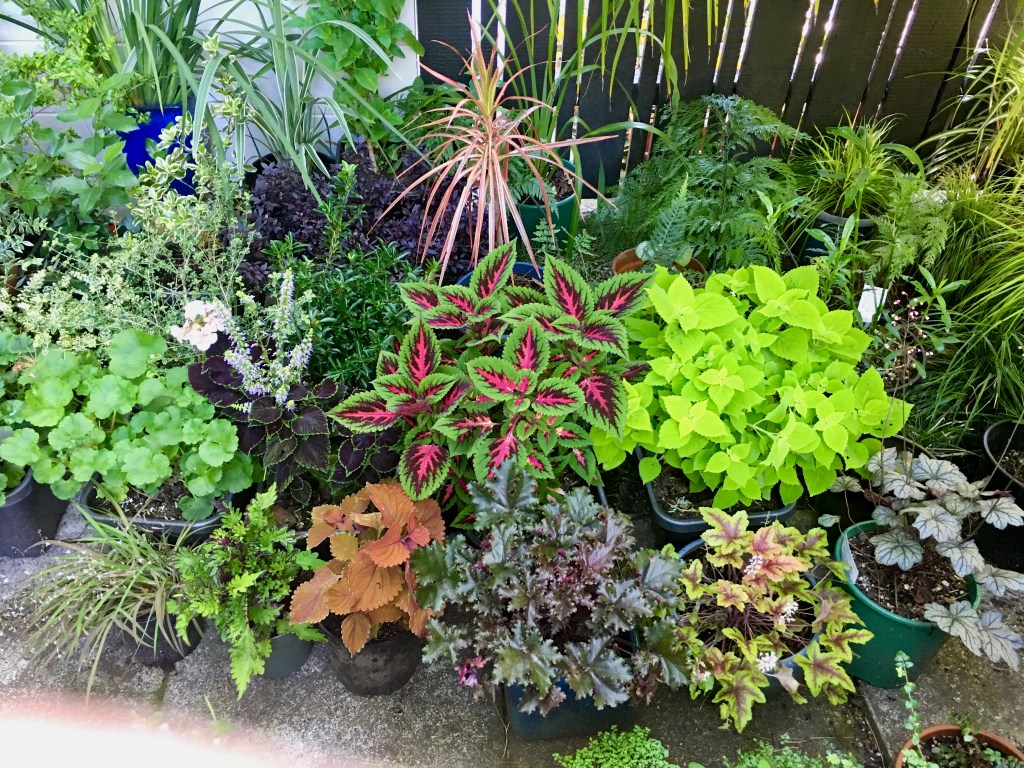
    At first, I couldn’t understand her, but then I realised that my wristband looked like the ones they put on you in hospital. I explained to her, and we both thought it was funny. And to finish, here are some of the plants in my garden.

  • Fair’s Fair. Pay the Fare.

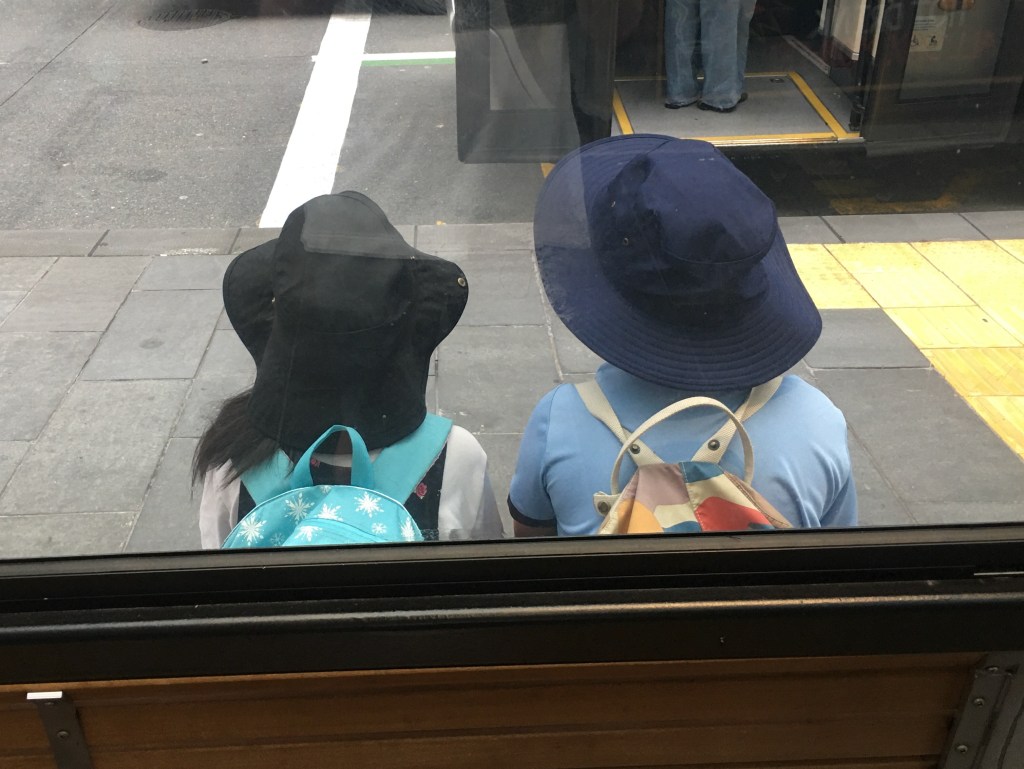
    This morning, I saw these two schoolkids (a girl and a boy) waiting for the same bus as me. When you’re on a bus, you see lots of different people, and you hear things. This is what I saw and heard, not today, but last week.

    At the same bus stop last week, the driver was waiting to start the journey. I was sitting in my usual seat, and in front of me, there were two young kids (not the two in the picture above). There was no adult with them. They looked like brother and sister. The girl was younger.

    I know this driver because I’ve been on his bus before. He’s a middle-aged Korean man, and he’s always friendly and polite. On this day last week, he got out of his seat and walked towards us. I thought he was just stretching his legs while waiting, but he wasn’t.

    He stopped in front of the kids, and asked the boy how old he was. He said he was 9. The driver said the boy didn’t tag on, and that he usually didn’t tag on. The driver said that only kids under five can travel free if they’re with an adult.

    The driver didn’t shout. He wasn’t angry, but he was firm. He just told the boy the rules. Then the driver returned to his seat and started the journey.

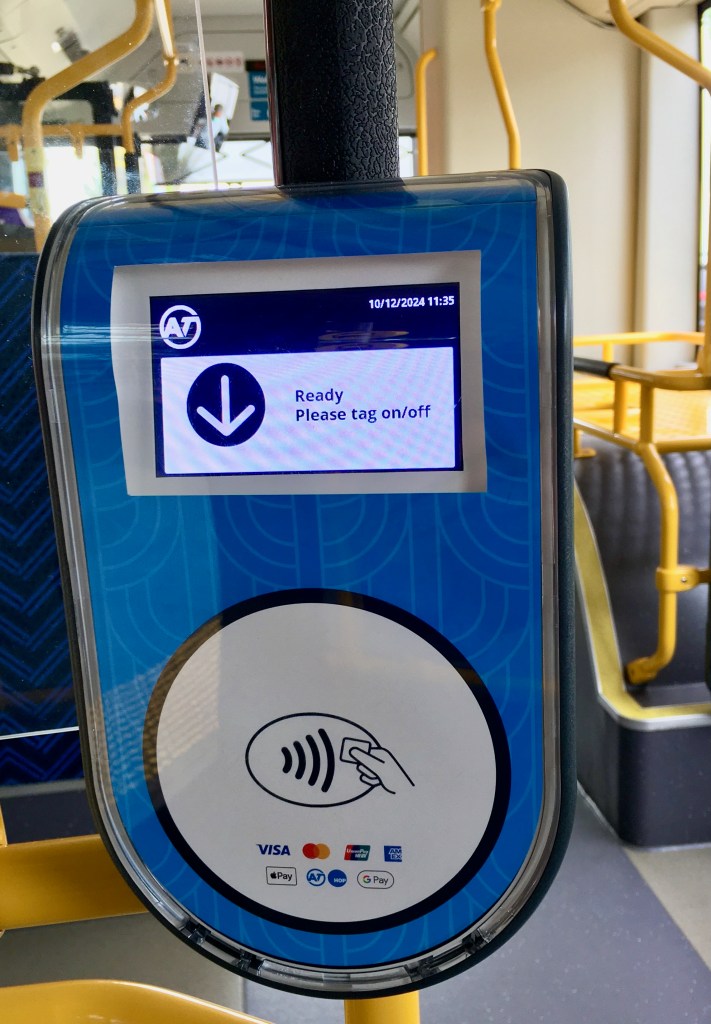
    The boy started looking for something in his backpack. He took out a HOP card, stretched for the reader and tagged on! So he did have a card, but didn’t tag on at the start. Why not? Did he forget or was he cheating? Who knows?

    When we came to the stop at their school, the girl tagged off, and the boy was half-off the bus. But then he remembered and searched again in his backpack for his HOP card. So maybe he really did forget.

    The next day, I was on the same bus again at the same time. I saw someone standing at the front of the bus near the driver beside the card reader. It was the same boy, searching in the same bag for the same HOP card!  So maybe he is just forgetful.

    Or maybe not. This morning, on the same bus at the same time, there was a different driver. The boy got on after me, but didn’t tag on. The driver didn’t say anything, and the boy just sat down. At the school, he hopped off, but he didn’t tag off. So maybe he isn’t just forgetful. Or maybe I should just mind my own business.

    LANGUAGE NOTES

    FAIR’S FAIR

    The words fair and fare sound the same. They have the same pronunciation. Fair is an adjective, and fare is a noun.

  • The Things You See

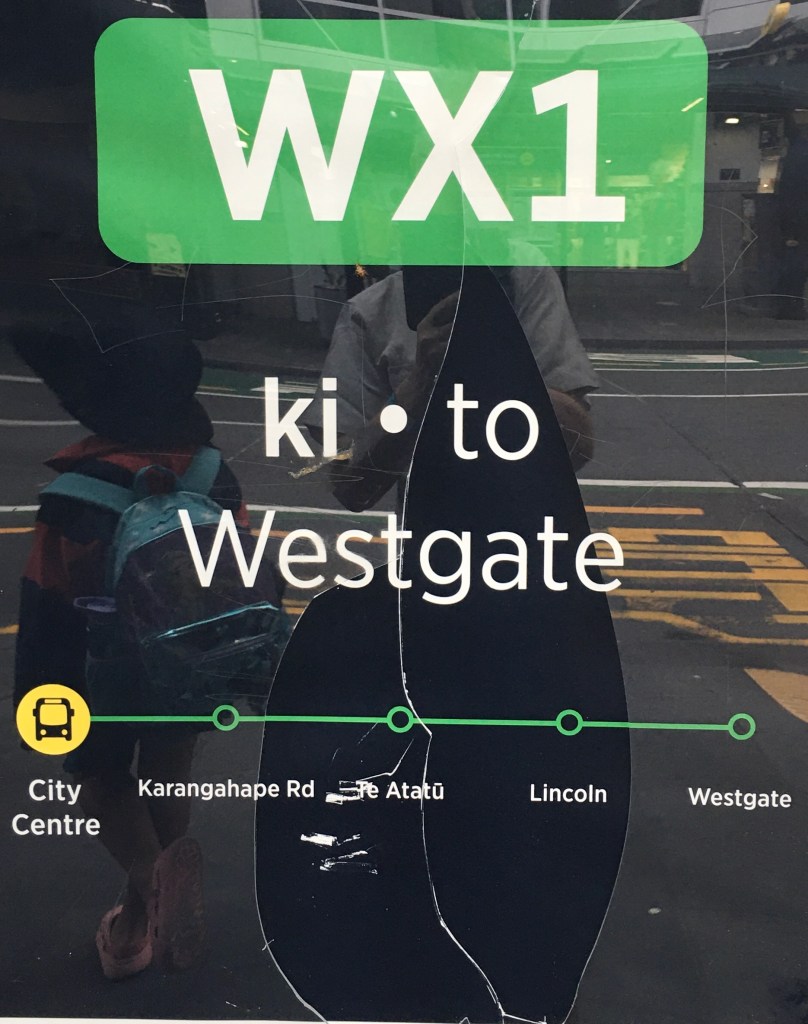
    One morning recently, I was waiting for the bus to arrive. As I was standing there, I looked around and saw something, so I took out my phone and took a pic.

    You can see two people reflected in the plastic screen. One of them’s me, and the other one’s a schoolkid wearing a backpack with blue straps, a black bucket hat and pink shoes.

    But that’s not why I took the photo. The reason I took it is because the plastic screen’s broken. I hope you can see this, but if you can’t, let me help you. Look at the green shape with WX1 in it. Next, look at the X. Now look at the bottom green triangle of the X. Can you see a thin, white line?

    Follow this white line. It goes around and forms a shape. Inside that shape, the plastic has all gone, and the only thing you can see is the black poster inside. What does the shape look like to you?

    To me, it looks like a giant tear drop. This makes me want to cry, because the broken screen wasn’t an accident. Somebody did this deliberately. I just don’t understand that.

  • Two on One

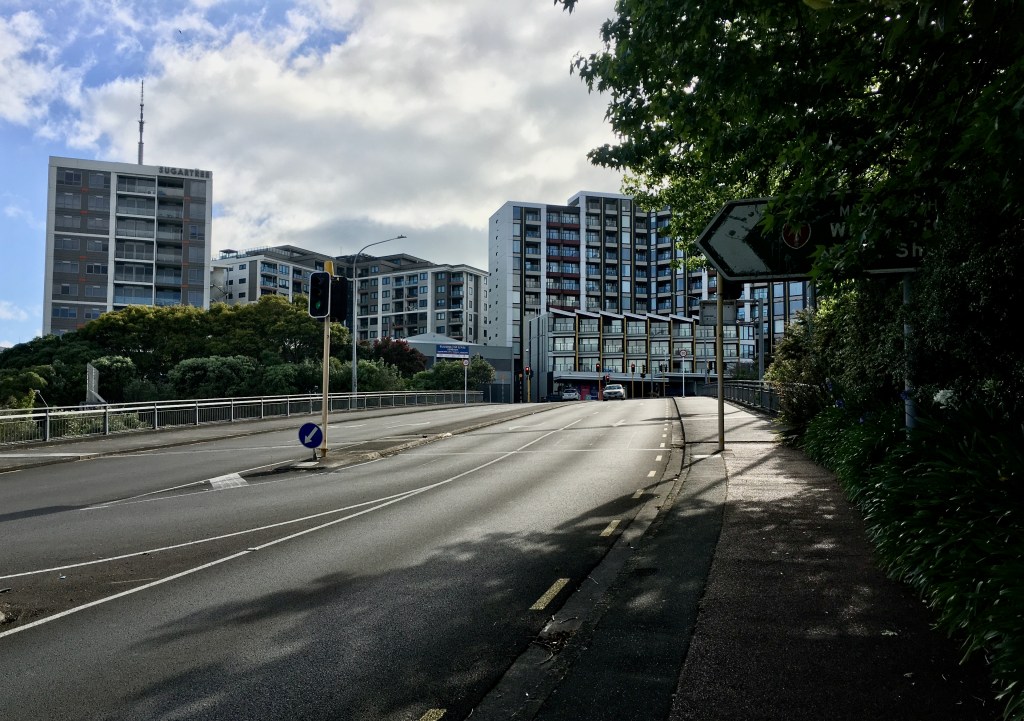
    It was 8.33 on a silent, sunny, Saturday summer morning, and I was walking home down the motorway bridge. There was nobody about, and there were very few cars. Then I heard s small noise behind me. I didn’t know what it was, but I didn’t look round. Then a guy on a scooter whizzed past me. And then another one. They didn’t ring a bell to let me know they were coming. I hate it when that happens.

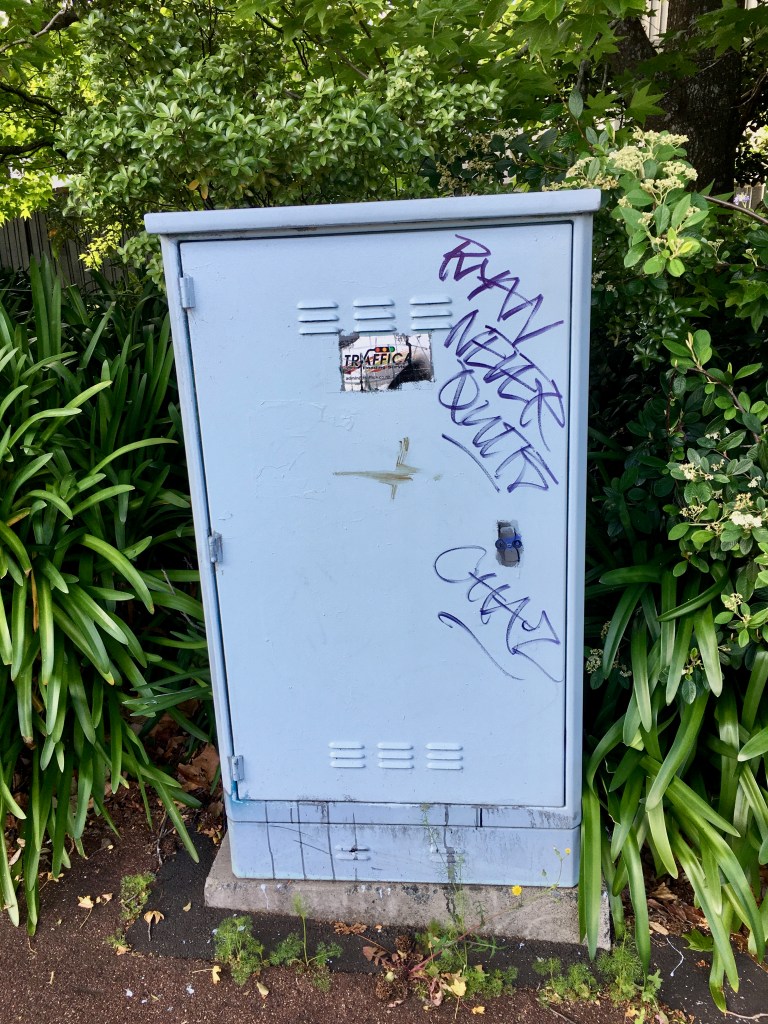
    The first guy went on, but the other one stopped a short distance in front of me. He was at the traffic lights, so I thought he was waiting to cross. But no, he wasn’t. Instead, he took a marker out of his pocket, and started writing on a junction box. You can see the results of his “artwork” below.

    I don’t know what he was thinking or why he did this, but I don’t think it was his first time. Who carries a marker pen in their pocket? To me, this kind of thing is just senseless. More than that, it’s just plain ugly, and that’s why it makes me so angry.

    When I came up to him as he was still at work, I stopped and looked at him, but he didn’t even look at me. Should I say something to him? He wasn’t a kid or a teenager; he was an adult. He was tall, but thin. And his face and neck were covered in tattoos. Ugly ones. By this time, the other guy had come back. He was much taller and broader.

    I didn’t say anything, and the thin guy scooted on, ignoring me. In a situation like this, the advice is to phone the police and not to do or say anything because that could make things worse.

    Sometimes, for your own safety, it’s better to say nothing. If I had opened my mouth, I might be writing this from hospital!

    And that reminds me of an Irish saying or proverb: Is minic a bhris béal duine a shrón = It’s often that a person’s mouth broke their nose. The message is clear: think before you speak or keep your mouth shut.

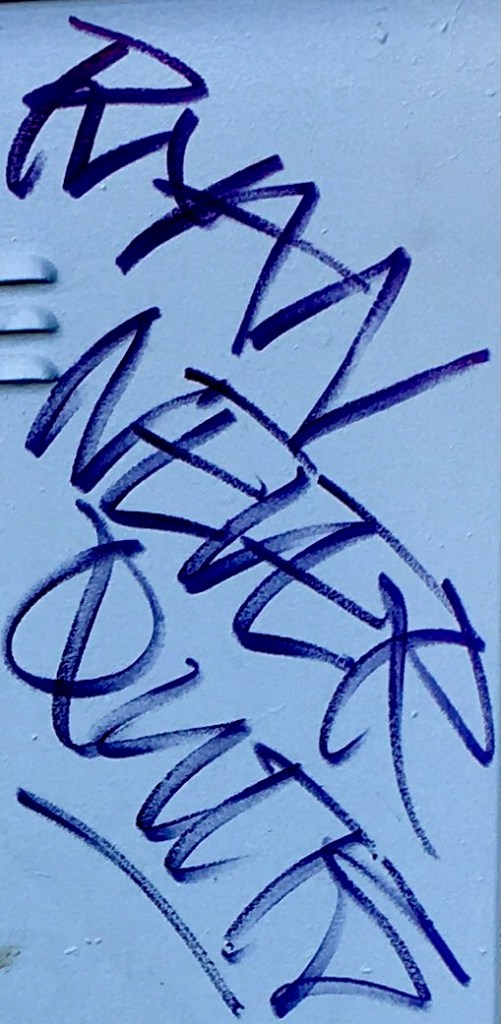
    The “artist” did a bad thing. We all do bad things, but we can change and become a better person. However, I don’t think this guy will ever change. I don’t think he wants to change. If you’re a language learner, it might be hard to read his words. They go from left to right, but not in a straight line. The words are Ryan never quits.

  • LESS LESS LESS LESS LESS

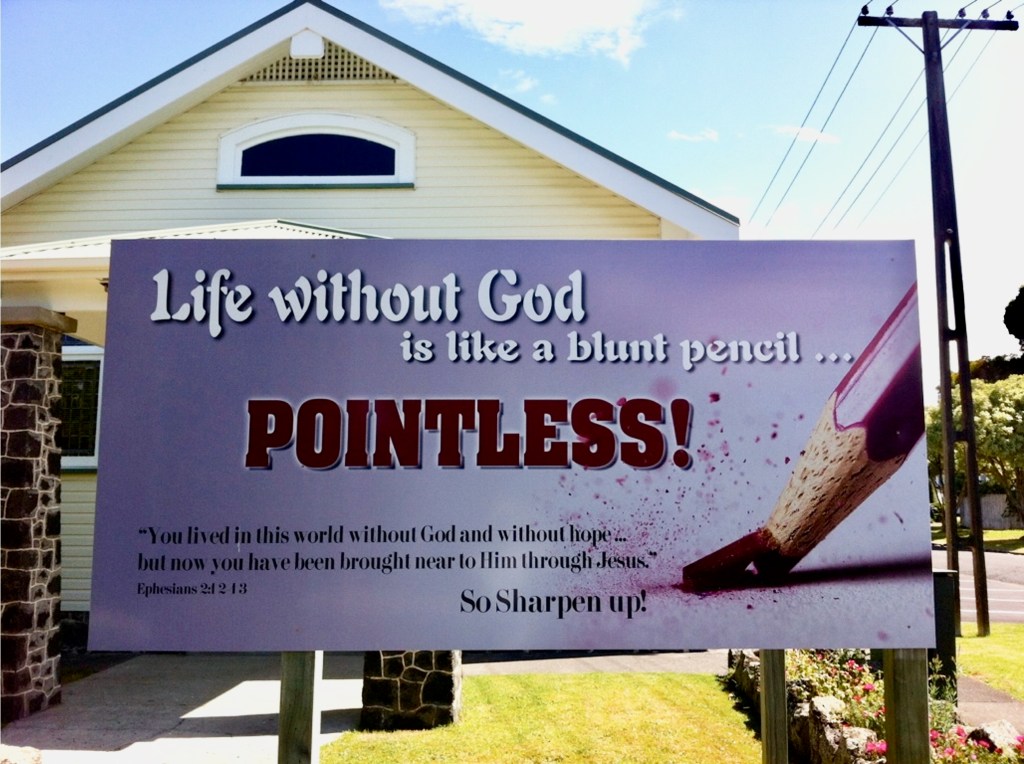
    I took this picture years ago because I thought it was clever. The pencil is pointless because the point is broken and you can’t write with it. But if we say an action is pointless, that has a different meaning. When an action is pointless, it means that there’s no reason to do it and that it’s a waste of time. If it has been raining heavily, for example, and your house is flooded, it’s pointless to start cleaning up yet because there’s going to be more heavy rain.

    Pointless is an adjective. Below, I’m going to describe some other adjectives that end in -less. Often, these adjectives can describe something negative, but not always. Sometimes, they describe good things, and sometimes they’re neither good nor bad. Your job is to think of the adjective. If you’re stuck, hover over the ANSWER.

    If somebody is doing a job, but they don’t pay enough attention, they make mistakes. This adjective describes that person. ANSWER

    It’s nice to have somewhere you can lay your head at night or where you can put your feet up after dinner and watch a movie on your laptop or TV, a place you have a key for. But some people can’t do that. Maybe they sleep on the street or in a park or in a shop doorway. They don’t have anywhere to call home.Those people are … ANSWER

    A lot of people spend their day from nine to five working and earning money. They’re the lucky ones. Other people would love to be like that, but unfortunately they’re … ANSWER

    Maybe you had too much coffee before bedtime. Or maybe you’re worried about something and you can’t stop thinking about it. Even though you’ve closed your eyes, it just won’t come, and before you know it, it’s time to get up again. Another … night! ANSWER

    My mother was always cleaning and tidying up. You could eat your dinner off the floor. The house was … ANSWER

    Sometimes you’ll see a young broken tree in a park, or a broken shop window, or a damaged bus shelter. Somebody caused the damage, but it wasn’t an accident. Why do some people do things like that? There’s no reason for it. It’s just … ANSWER

    Some people, and not only children, can’t sit still. They have to keep moving. This type of person is described as … ANSWER

    Most people, when they see someone in trouble, they’ll try to help. It’s natural. But some people are the opposite. They don’t care about other people. Even if they can help, they won’t. That kind of person is … ANSWER

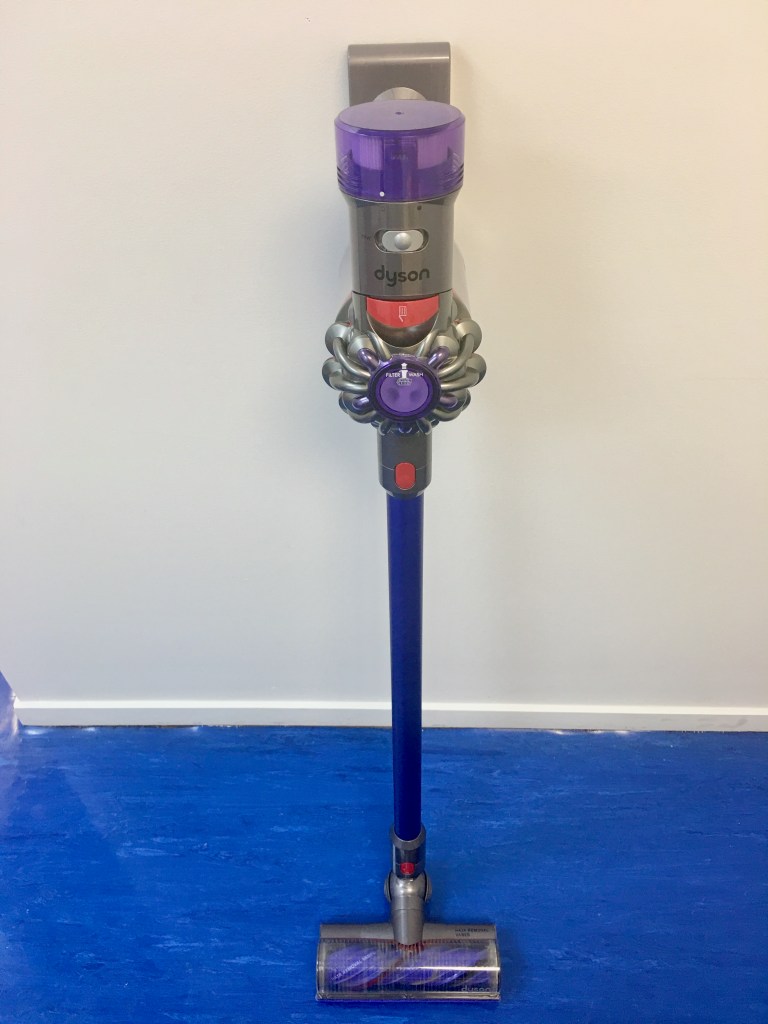
    Nowadays, with things like vacuum cleaners or laptops, you don’t have to plug them into the wall to use them. You can move them about and use them. That’s why they’re called … ANSWER.

    If there’s danger, most people will run away from it, but some people will face the problem and try to fix it, even though they might get hurt. This adjective refers to that kind of person. ANSWER

    And now, the last one! Look at this sand. There’s a lot. But it’s made up of many, many, many small pieces. How many? It’s impossible to say. We use this adjective to talk about how many there are. ANSWER

  • IT PAYS TO LISTEN

    After my early morning swim today, I was looking forward to sitting in the sauna and then relaxing in the spa pool. But only one of those things happened. When I got to the spa pool, there were two women and three workmen standing around it. They were talking and looking into it, but the pool was empty. I don’t mean there were no people in the pool; the pool was empty because there was no water in it.

    So I went into the sauna. It was empty, too, because I was the only one there. I sat on the top bench, enjoying the heat and the quiet. But one of those things didn’t last long. Another man came in, and he was muttering under his breath. He wasn’t talking to me, but he wanted me to hear. As he sat down on the bench below me, he muttered “hopeless … useless!”. He wasn’t happy, and he told me why. I didn’t want to hear, but I couldn’t just leave.

    Here’s why he was unhappy. Apparently, a pipe was leaking, and the workers were going to fix it and replace the tiles. The man was upset because the spa pool had been closed a short time before this because of another leak. This time the spa pool was going to be closed for a week. That’s what the man told me anyway.

    When he shut up, I started thinking about that first word that he said: hopeless. Hopeless describes someone who has no hope, for example starving people looking for food, or people in a similar serious situation. 

    But that’s not what this man meant. He meant that the five people standing around the pool and talking about the problem were hopeless, in other words, they were no good at their job. He was blaming them for the problem. So the two words that the man used (hopeless and useless) meant the same thing.

    So maybe you’ve learned another meaning for hopeless in spoken English. And that’s why today’s story is called It Pays to Listen. You can learn lots of good spoken English by simply listening to people on the bus or train or in the supermarket.

    Usually, when you pay, you give someone money, but in the phrase “it pays to …”, it just means it’s a good idea. For example, “it pays to look both ways before crossing the road”, or “it pays to shop around before buying something”.

    I hope you found this story useful.