Category: Uncategorized

  • Night night, sleep tight

    What do you wear in bed? Some people wear nothing, but others wear pyjamas

    Sometimes the spelling is pajamas, with an “a” instead of a “y”, but the sound is the same.  Pyjamas or pajamas are short words, but some people shorten them more and call them PJs. They’re also called jammies or even jim-jams.

    In winter, when it’s cold, they keep you warm in bed. I don’t wear them, but if I wanted to, I could buy a pair. However, some families can’t afford them, especially if they have children, so the kids are cold at night and don’t get enough sleep. That’s a health problem, and some people want to fix it.

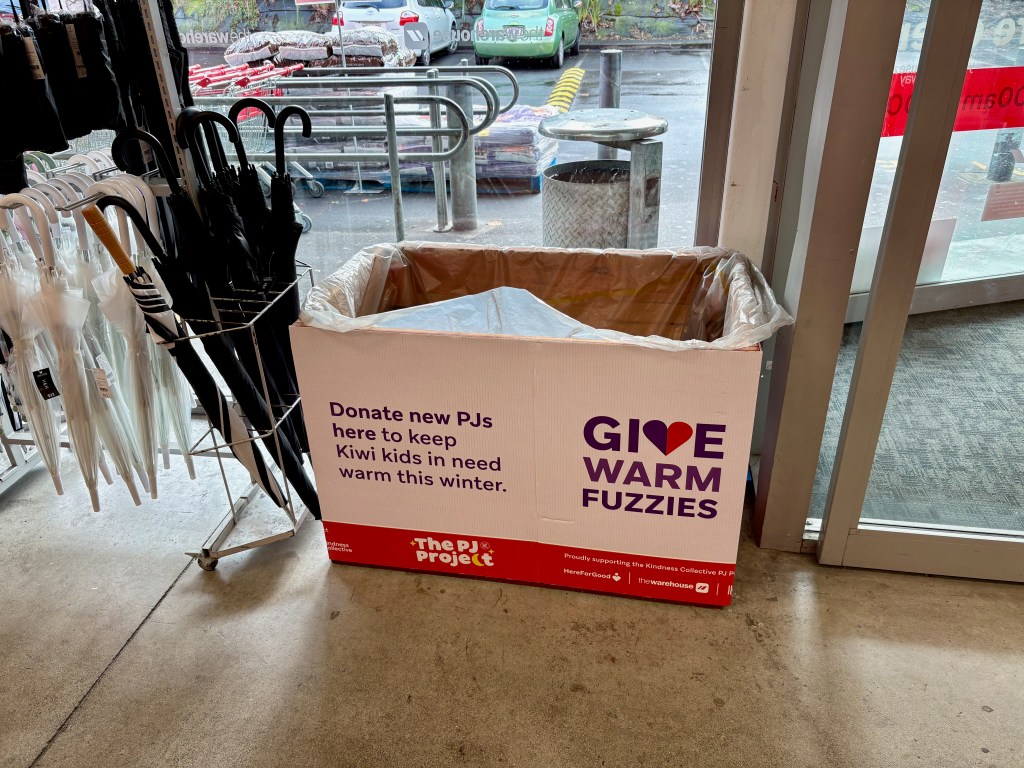
    It can be fixed like this. If you have $10 you don’t need, you can buy a pair of PJs at The Warehouse, put them in a box at the exit, and a lucky kid will get a present that will keep them warm at night. They won’t know who gave them the jammies, but you’ll know that you’ve done something good.
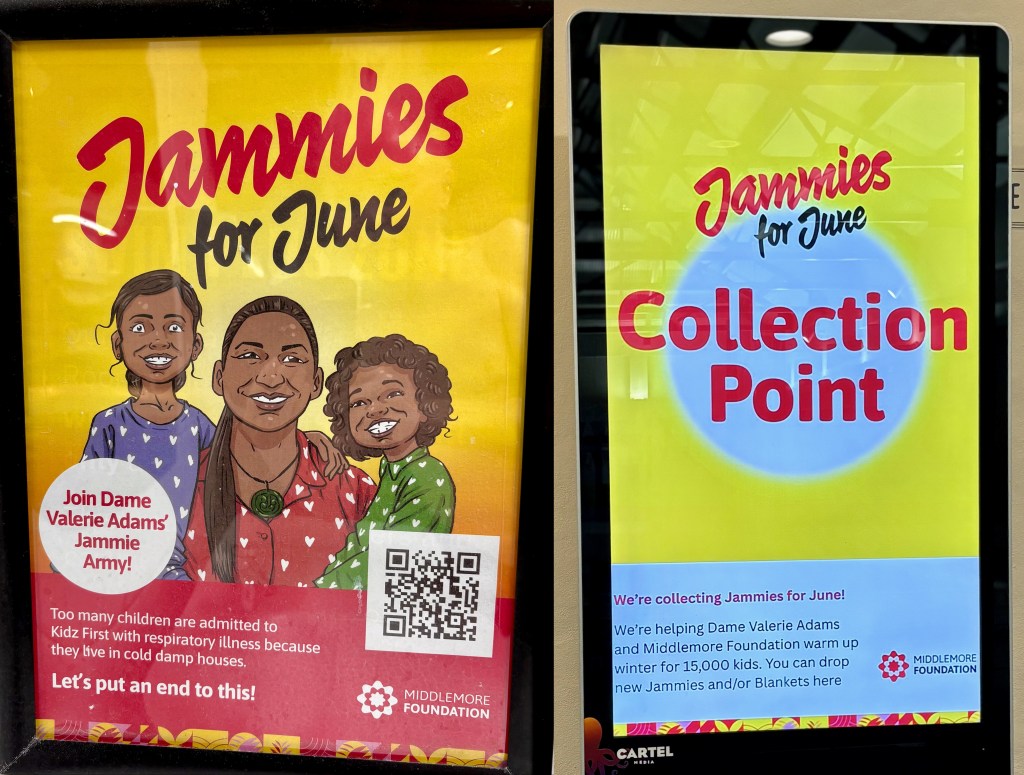
    In this month of June, another organisation, Middlemore Foundation, is collecting pyjamas and also blankets to give to needy kids to help keep them warm in bed. I saw these ads at my local swimming pool.
    Night night, sleep tight

  • Take your pick?

    It’s now June, so last month was May. Every year in New Zealand, May is Music Month to promote local music and musicians.

    The main railway station in the centre of the city is called Waitematā Station or Britomart in English. There’s a big open space called Te Komititanga in front of the building.

    In May, there was a big purple container in the middle of the space, and inside it was a small theatre which only held a handful of people at a time.

    People queued up outside on a small red carpet, and when it was their turn to go in, they heard one song only by a Kiwi artist. However, they don’t know which musician they were going to hear until they went in. I called this post Take your Pick, but you couldn’t take your pick, so that’s why there’s a question mark in the title.

    When I arrived, they were closing for the day, so I didn’t get a chance to go in. Only another eleven months to wait, though!

  • There but for …

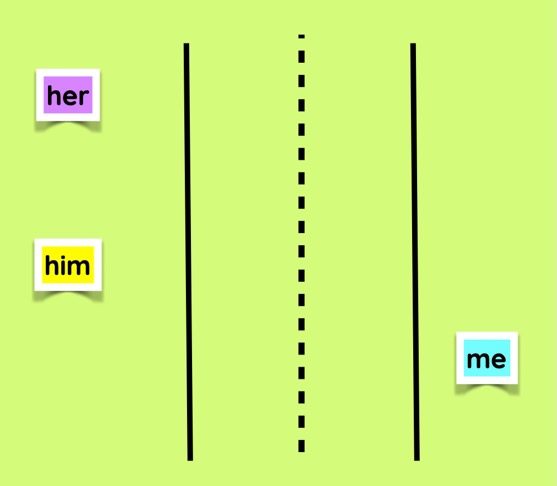
    After my swim this morning, I was walking home about 7.30 along a back street. I was on one side of the street. On the other side, a man was sitting on the pavement. On the same side of the street, a young woman was walking towards him. The diagram below shows our positions.

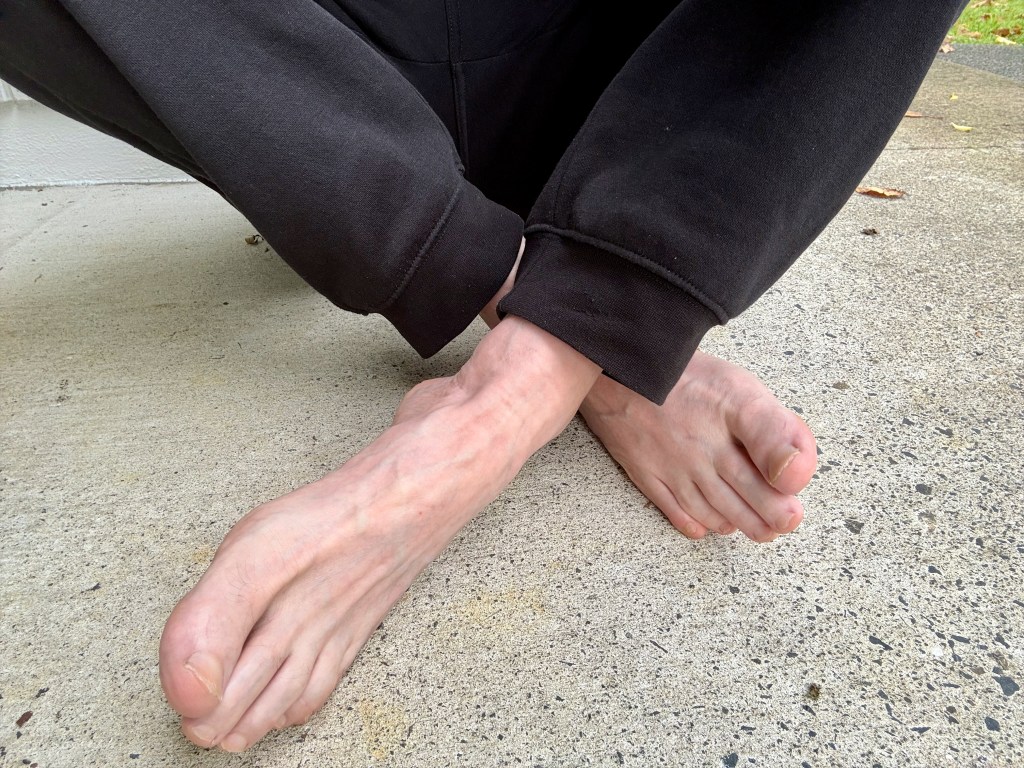
    The man was sitting cross-legged, and he didn’t have any shoes or socks on. 

    He looked very sad. No, sad is the wrong word; he looked miserable and hopeless. He also needed a wash. But when you have nowhere to go and you live on the street, life isn’t easy.

    I decided to cross the road so that I could walk past him, look at him and nod. As I was crossing, the young woman was beside him. She bent down and handed him the breakfast drink that she was carrying. He took it. You can see its name below.

    By this time, I was beside him, so I said good morning and asked him if he needed anything. Immediately and without hesitation, he said no. Then I said, “Do you need any money?” I can’t remember if he said anything, but I had some notes in my wallet.

    They had been in my wallet for years. I hadn’t used them because I always pay for things by card. I gave him one, shook his hand and walked on.

    The person in the bare-footed picture at the top isn’t that man; it’s me. Who knows why he’s living on the street? I don’t know, but I know this. That could happen to anyone, and it makes me think of an old saying: There, but for the grace of god, go I.

  • PINK SHIRT DAY

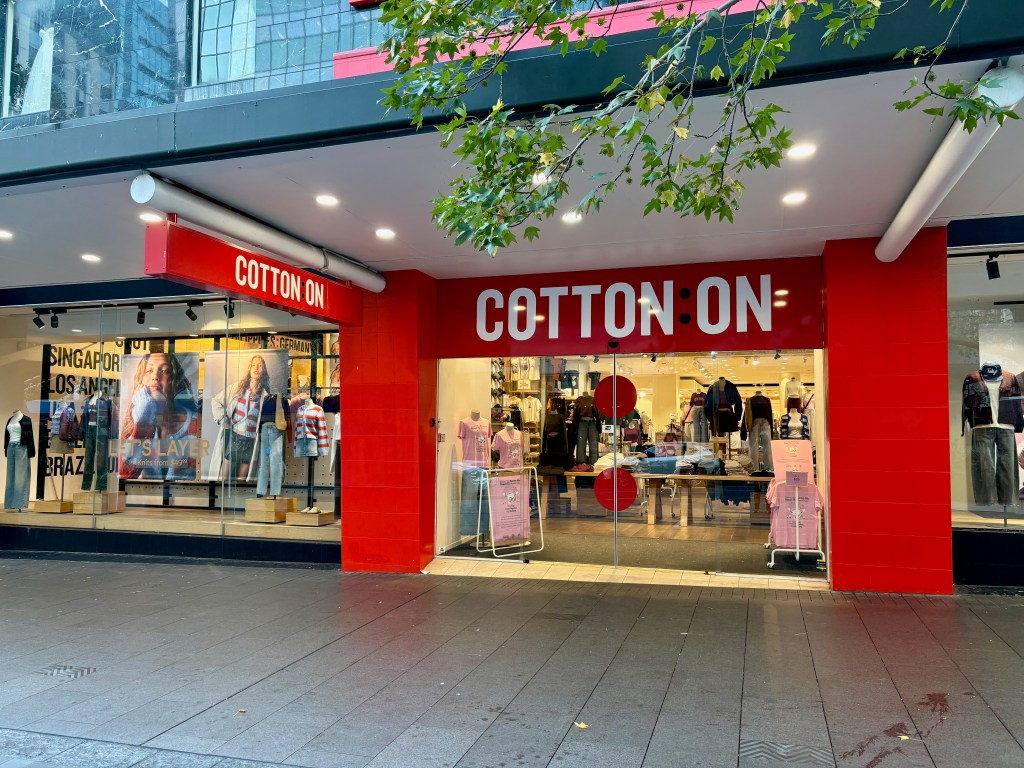
    This is a shop on Queen Street here in Auckland. As you can guess from the name, it’s a clothes shop, because many clothes are made from cotton. “Cotton on” has a special meaning in English. It means to finally understand something. But today I want to talk about the clothes that are inside the windows.

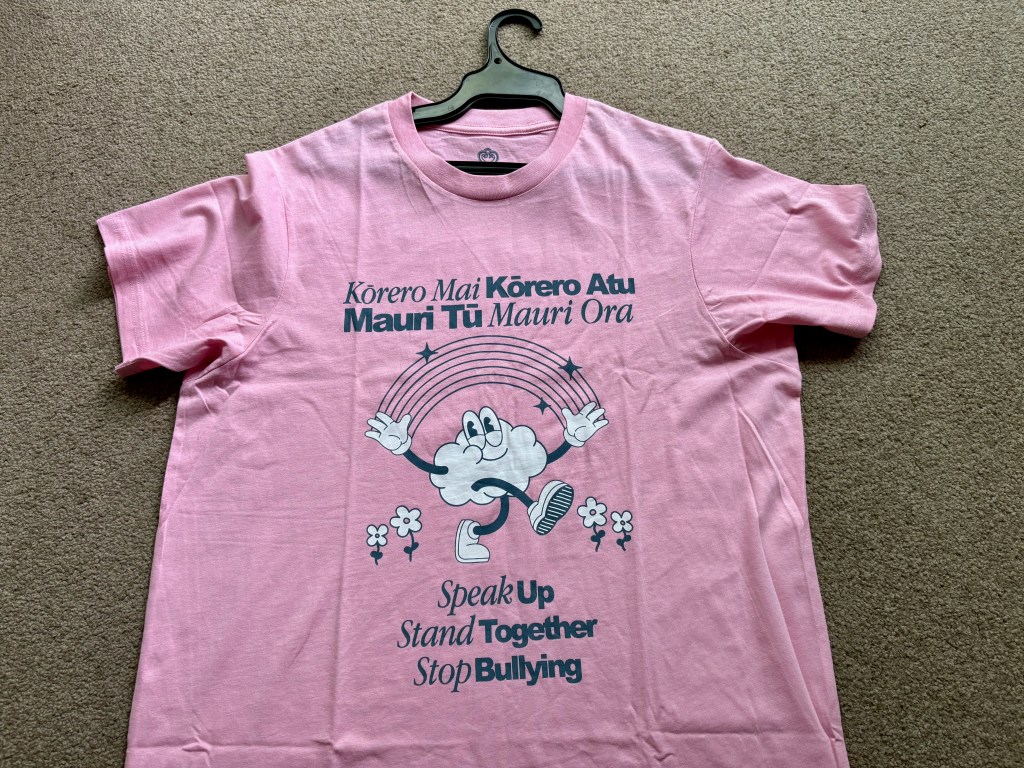
    They’re pink T-shirts because today is Pink Shirt Day. This day happens once a year, and the message is anti-bullying. In the changing room at the swimming pool this morning, I saw this message about it.

    Bullying can be a big problem, not only for school kids, but also for adults in the workplace. A school bully is usually bigger, older and stronger than the person they bully. They steal things from a weaker person, call them names, and generally make life hell for the bullied person. And at work, bosses can also sometimes be bullies. 

    Pink Shirt Day is a way of telling the victims of bullying that they’re not alone. When bullying victims see lots of people wearing pink or wearing these T-shirts, that gives the same message.

    And the message is to open your mouth and tell someone. Don’t keep quiet. Don’t be afraid to ask for help.

    I bought this T-shirt today and also a tote bag to show support in my small way for the little guy.

    And Cotton: On is also giving all of the profits from the sale of these items to fight bullying.

    When I was at school, I was small and skinny, but luckily, nobody ever bullied me. When I hear stories today about bullying, though, it makes me very angry. Recently, I watched a Korean show on Netflix about bullying. There are two seasons, and it’s called Weak Hero. It has subtitles. You should watch it.

  • What’s in a name?

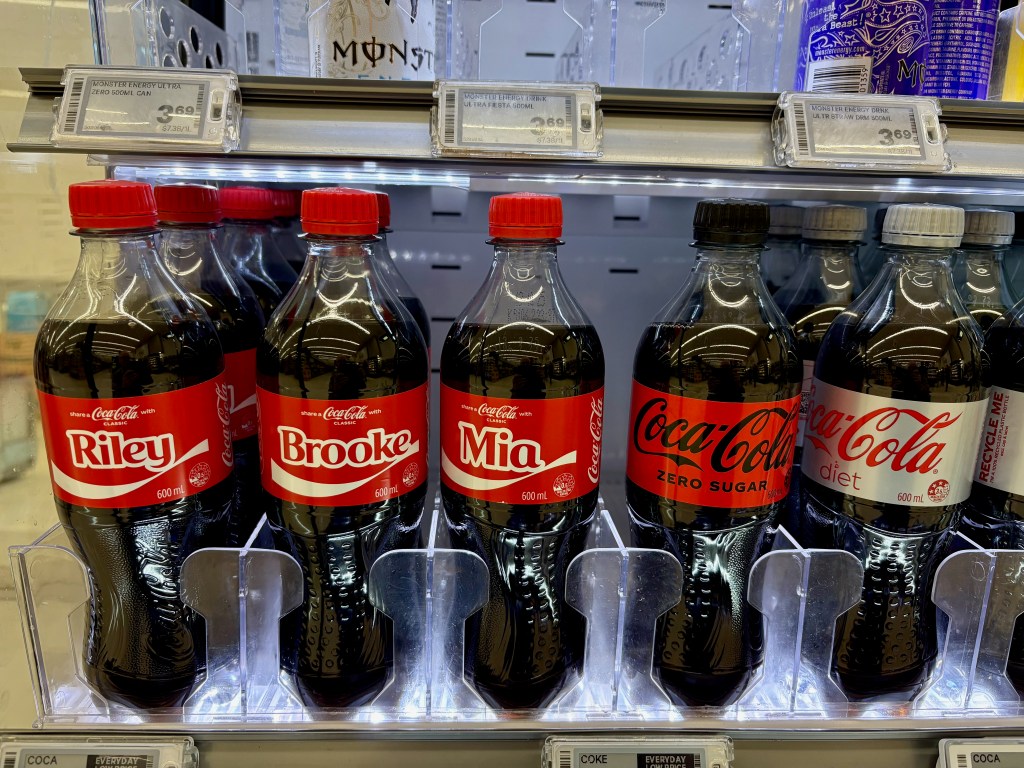
    At the time of writing, I’m a day late with this post. I saw this poster the other day at one of my local supermarkets. It’s advertising probably the most famous soft drink in the world.

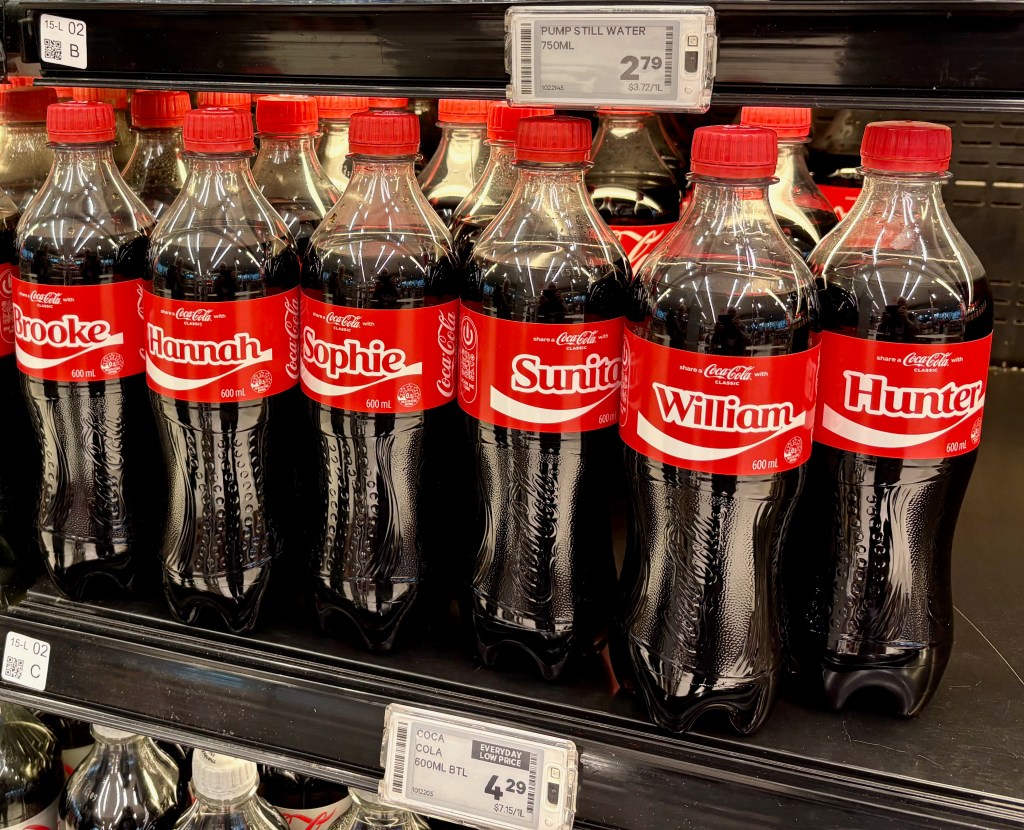
    All the bottles of this drink are the same, and people buy them for the drink that’s in them, not the label. But for one day, you can buy a bottle with your name on it. If you have a common or a usual name, you can find a bottle with that name on the shelf. 

    But if you have an unusual or an uncommon name, someone will print your name, or a friend’s name, on a label if you go to this store between certain hours on a certain day. But as you can see on the poster, that date has now passed.

    Is your name on these bottles, or do you know anyone with those names?

    How many female and how many male names do you recognise in the picture below? Do any of your friends or family members have these names?

  • Here today, gone tomorrow

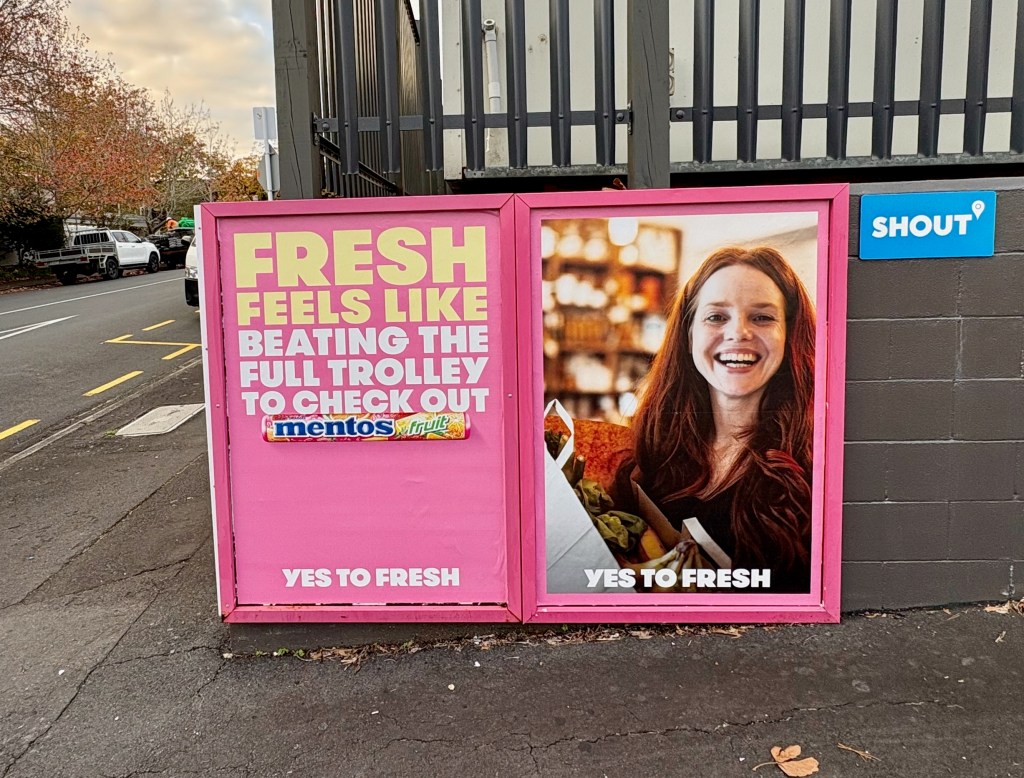
    In yesterday’s post, I showed two Mother’s Day posters. Today, I walked past the same spot, and there were different posters in the same place. What a difference a day makes! BTW, there’s an old song in English with the same name, but it was written and sung originally in Spanish in Mexico.

    Anyway, I did what the advertisers wanted me to do: I looked at the poster and read the words on it. At first I didn’t fully understand it, so I thought maybe language learners might not understand it either.

    It’s advertising popular sweets or candy or lollies in this country. Maybe you have them in your home country, too, or maybe they have a different name. Here, they’re called Mentos.

    In the poster on the right, you can see a smiling young woman in the supermarket with a bag of groceries in her arms. She hasn’t bought a lot, so when she went through the checkout, it was quick.

    But when she was on her way to the checkout, she saw someone just in front of her with a full trolley of groceries. They were both heading for the same checkout. If the other person got there first, the young woman would have to wait a long time, so she walked quicker and got there first. It’s a common checkout experience.

    The message of the poster is that if you buy and chew Mentos, you’ll have the same good feeling as the young woman in the poster. Hmm. I’m not so sure about that. I’ll have to chew on it.

  • Everybody has one.

    One what? A mother, of course. Today is Mother’s Day here in Aotearoa New Zealand. It’s also my twin sisters’ birthdays, so to (in alphabetical order) Lilian in Ireland and Mary in Canada (hope you’re reading this), happy birthdays and also Mother’s Days.

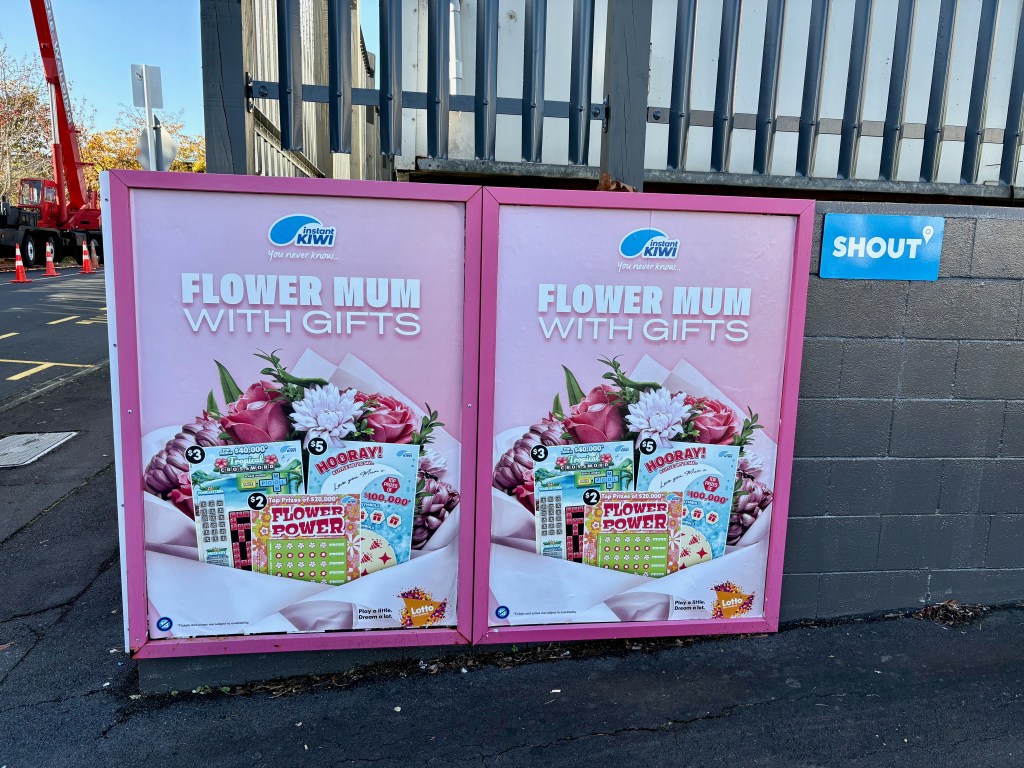
    I saw these posters the other day outside the supermarket. Maybe the advertisers thought people wouldn’t see one poster, so they put up two just in case.

    I think the first white word is clever. On Mother’s Day, children (both young and old), give their mothers flowers, and you can see some flowers in the poster. But if you’re a language learner, maybe you don’t see why “flower” is clever.

    It’s because there’s another word that sounds like flower: shower, and if you shower someone with something, you give them a lot of it … just like when you stand under the shower in the bathroom, the water just keeps on running and running.

    These posters are encouraging children (both young and old) to buy scratch cards for their mothers. The cards are cheap: $2, $3 or $5, so they’re affordable for kids. Some people might think this isn’t a good idea because it’s encouraging gambling, but others might think it’s just a piece of fun. And you never know, she might win!

    The holiday known as Mother’s Day was started by Anna Jarvis, an American, in 1908. At first, she thought it was a good idea, but she later turned against it because it became too commercialised. In other words, it was all about buying things and then buying more things. I think I agree with her.

  • The Lost Doll

    It was a lovely, cool, sunny, autumn Saturday here in Auckland, and it was nice to see the sun and blue skies again after a couple of days of rain.

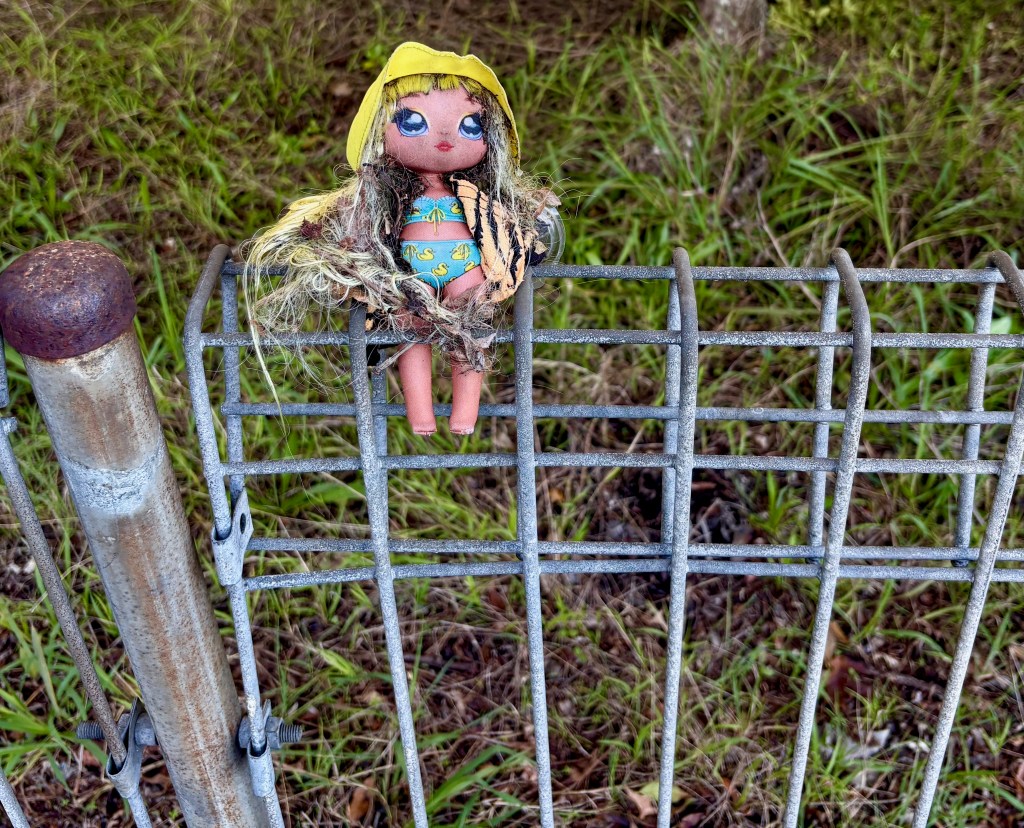
    I was walking home when I saw this, so I took a picture. I was thinking about it and asking myself questions. What is it? Why is it there? How did it get there? I’ll never know for sure, but I can guess. It’s a child’s doll. The doll is a girl with big eyes and long hair, it’s wearing a swimming costume, and it’s sitting on a fence.

    Maybe someone threw it out of a car window and it just landed on the fence, but I don’t think so. Nobody’s that good of a shot!

    A more believable reason is this. A parent was walking along. They were pushing their child in a pram. The child was playing with the doll and threw it out of the pram. The parent didn’t see this, walked on, and the doll was lying on the ground.

    Later, someone was walking there and saw the doll. On the ground, it was hard to see, so the walker lifted it and put its legs into a hole in the fence. That way, it would be easier to see if the parent came back to try and find it. 

    What a thoughtful, considerate thing to do!

  • Back Off!

    I was walking near Auckland university a while back. It was between lectures, and there were plenty of people walking here and there. In front of me, I noticed this guy, or rather I noticed his backpack.

    Initially, I thought the hand was making a rude gesture, but when I looked more closely, I saw that it was the wrong finger. So I had to think again.

    Then I noticed the word OFF. I think the message is: HANDS OFF. In other words: this is my stuff, don’t touch it, don’t touch me, don’t try to steal from me, don’t even think about it, back off.

    OK. Got the message.

  • It’s a Dog’s Life.

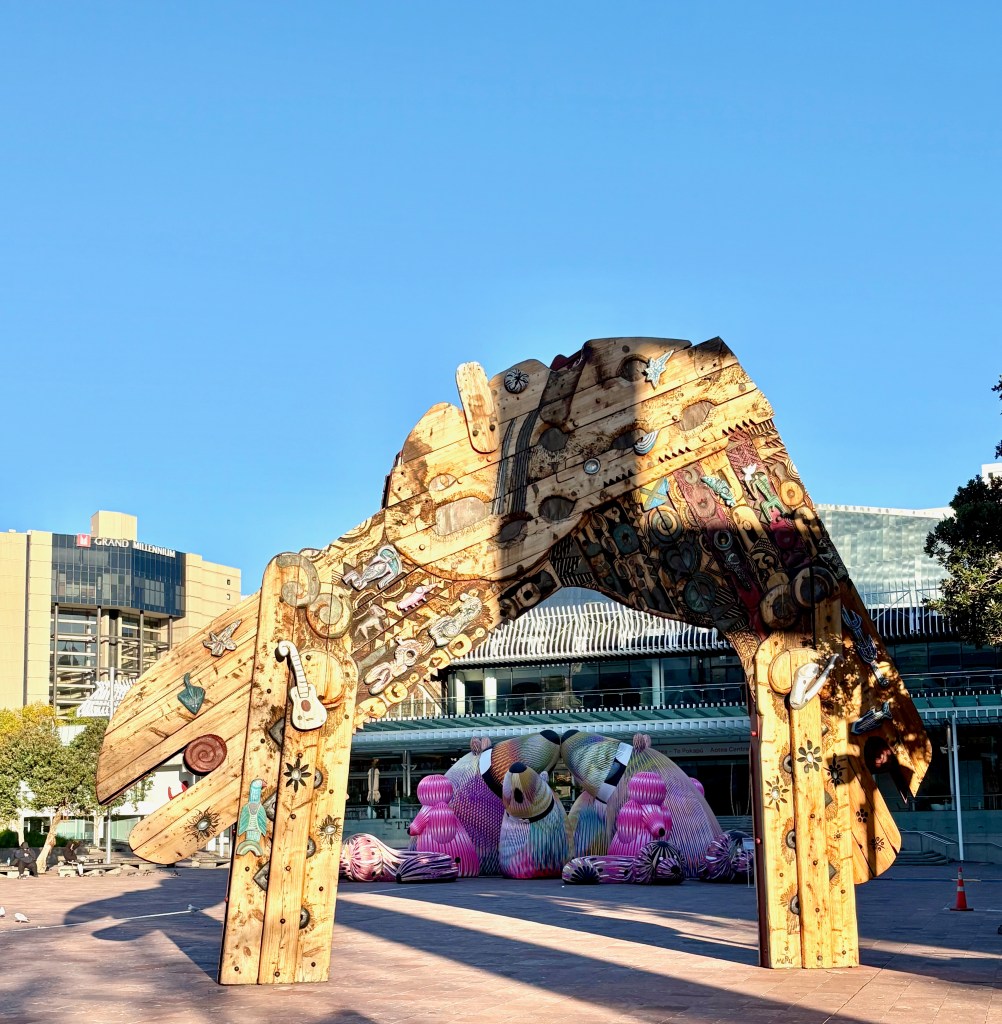
    I was in the city early one morning when most people were still in bed. The day was very young when I took this photo through the arch in Aotea Square on Queen Street. Through the arch, you can see an art installation.

    It’s visiting Auckland from Melbourne in Australia, and it’ll be here until late April.

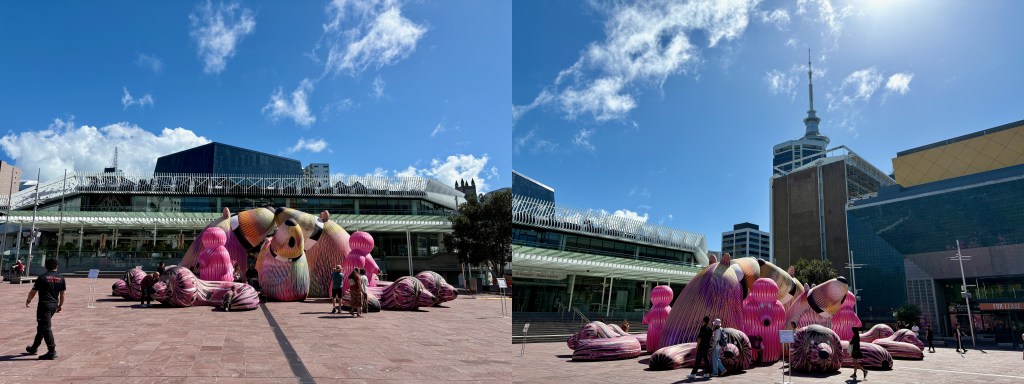
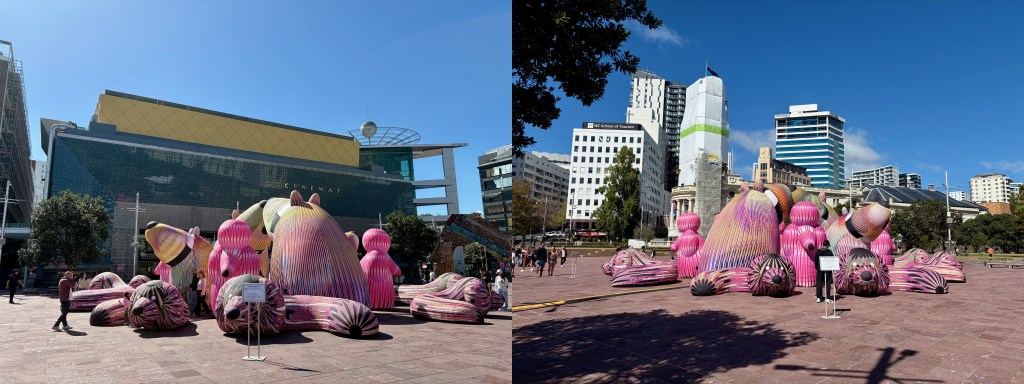
    It’s a group of dogs. Some of them stand 5 metres tall, and some of them are lying along the ground.

    They’re made of soft but tough plastic and are filled with air. It’s OK to touch them, but you’re asked not to jump on them or sit on them.

    There’s music playing as you walk around the installation or among the individual dogs.

    The artworks also light up and the colours change. I took the pictures above when it was daytime and when there weren’t many people around, but I went back later in the day when the sun was starting to go down and took this video. I think they would look much better and more impressive if it was completely dark.